
What's Happening?
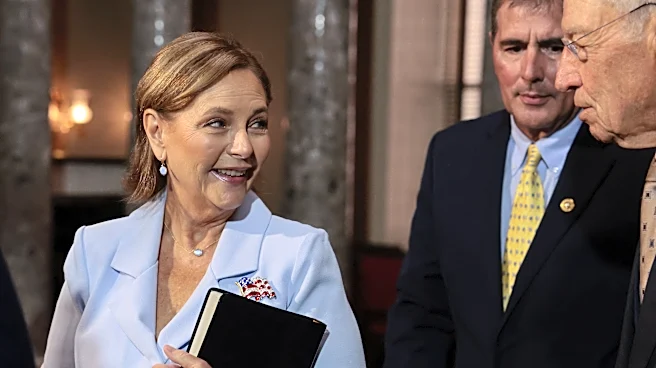
Representative Gregory Meeks (D-NY), the leading Democrat on the House Foreign Affairs Committee, has voiced strong opposition to the Lindsey O. Graham Russia Sanctions Act of 2026. Meeks argues that the bill
grants the President overly expansive discretion and waiver authority, which could be misused. Specifically, he warns that President Trump could weaponize this authority as a new tariff mechanism against countries like India and China. These nations were previously targets of secondary tariffs that were later deemed unconstitutional in February 2026. Meeks' concerns are echoed by other prominent Democrats, including Representative Richard Neal, the ranking member of Ways and Means. The bill, which passed the Senate 86-11 on August 7, 2026, is currently awaiting consideration in the House of Representatives. It authorizes the President to impose secondary tariffs of up to 100% on the top five importers of Russian oil and gas, as well as countries facilitating sanctions evasion or making new purchases of Russian energy.
Why It's Important?
The opposition from Representative Meeks and other Democrats highlights a significant division within Congress regarding the scope of presidential power in foreign policy and trade. If the bill passes with its current broad discretionary powers, it could set a precedent for future administrations to unilaterally impose tariffs under the guise of sanctions, potentially bypassing traditional legislative processes for trade policy. This could lead to increased trade policy volatility and uncertainty for U.S. businesses and international partners. The potential for the bill to be used against India and China, as Meeks suggests, could escalate trade tensions with two of the world's largest economies, impacting global supply chains and U.S. economic interests. Furthermore, the debate underscores the ongoing tension between congressional oversight and executive authority in implementing sanctions and trade measures, with implications for the balance of power within the U.S. government.
What's Next?
The Lindsey O. Graham Russia Sanctions Act of 2026 is expected to be taken up by the House of Representatives after its recess on September 1. Republican leadership in the House could prioritize the bill, potentially circumventing procedural delays that Representative Meeks might attempt through a lengthy markup process. Ukraine may also exert political pressure on Democrats to support the bill's passage, similar to its influence during the Senate's consideration. The stance of President Trump remains a critical factor; while the White House reportedly assured support for the current draft due to its executive discretion, any amendments that narrow the tariff authority or limit waiver discretion could cause that support to wane. If President Trump's approval diminishes, House Speaker Mike Johnson may not bring the bill to the floor, especially given the declining influence of Russia hawks within the Republican party.
Beyond the Headlines
The debate surrounding the Lindsey O. Graham Russia Sanctions Act of 2026 extends beyond immediate geopolitical concerns, touching upon fundamental questions of constitutional authority and the future of U.S. trade policy. The bill's broad waiver authority, while intended to provide executive flexibility, raises concerns about the potential for political weaponization of economic tools. This could lead to a less predictable and more unilateral approach to international trade, potentially undermining established trade agreements and international norms. The historical context of previously struck-down secondary tariffs against India and China suggests a legal and constitutional battleground if the new bill is similarly applied. The outcome of this legislative effort could redefine the boundaries of presidential power in economic statecraft and influence the U.S.'s long-term relationships with key global economic players, potentially shifting alliances and trade flows in unforeseen ways.