





What's Happening?
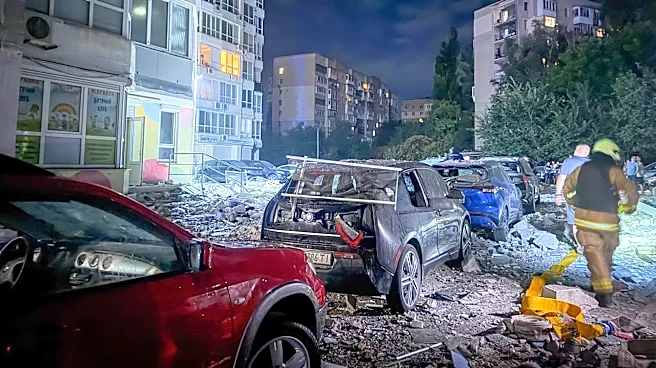
John Roberts, an adjunct senior fellow at the Washington-based Atlantic Council think tank, has commented on Russia's deepening fuel crisis, which is being exacerbated by Ukrainian strikes on Russian oil refineries. These attacks have led to restrictions
on gasoline exports, rationing measures, and Russia's search for additional fuel processing capacity abroad. One such agreement involves the small Kazakh refinery 'Kondensat,' which is set to process Russian crude oil, with approximately 70% of the resulting fuel returning to the Russian market. However, state-owned Kazakh refineries have declined to assist Moscow due to fears of Western sanctions. The 'Kondensat' refinery, with a capacity of 200,000 metric tons of gasoline per year, can only meet about 0.3% of Russia's daily gasoline needs, which are up to 120,000 metric tons per day during summer months. Roberts suggests that even small additional volumes of fuel could be significant given Russia's severe shortages, particularly for supplying troops at the front.
Why It's Important?
This situation highlights the significant impact of Ukrainian military actions on Russia's domestic economy and its war efforts. The fuel shortages, as noted by Roberts, indicate a vulnerability in Russia's infrastructure and its ability to sustain its military operations. The reluctance of state-owned Kazakh refineries to engage with Russia due to sanction fears underscores the effectiveness of Western sanctions in deterring third-party support for Russia's war. This dynamic could further isolate Russia economically and complicate its efforts to mitigate the effects of the strikes. The limited capacity of the 'Kondensat' refinery to address Russia's overall fuel needs suggests that Moscow's options for external processing are constrained, potentially leading to continued domestic economic strain and challenges in supplying its military. The ongoing fuel crisis could also impact global energy markets, depending on the severity and duration of Russia's production shortfalls and export restrictions.
What's Next?
Experts anticipate that Russia will likely attempt to involve more Central Asian facilities in processing its crude oil as Ukrainian attacks on refineries continue. John Roberts suggests that Russia will pressure countries like Kazakhstan and Uzbekistan to increase their supplies of gasoline and diesel fuel. However, Ukrainian energy analyst Hennadiy Riabtsev believes that Central Asia lacks sufficient surplus capacity to provide substantial assistance to the Russian market, stating that any supplies would be a 'drop in the ocean.' Central Asian countries also face the risk of secondary sanctions from Western nations if they significantly aid Russia, which could harm their trade and investment relationships with the rest of the world. Vladyslav Vlasiuk, Ukrainian President Volodymyr Zelenskyy's commissioner for sanctions policy, indicates that a broad network of willing suppliers for Russia is unlikely to materialize, as potential partners understand that much of the fuel would be for military needs, increasing their risk of sanctions.
Beyond the Headlines
The deepening fuel crisis in Russia, exacerbated by Ukrainian strikes and the limited external processing options, reveals a critical vulnerability in Russia's war machine and its broader economy. Beyond the immediate military implications, this situation could lead to long-term shifts in regional energy dynamics. Central Asian countries, traditionally influenced by Russia, are now navigating a complex geopolitical landscape where economic ties with Russia must be weighed against the risk of Western sanctions. This could accelerate their diversification of economic partnerships and reduce their dependence on Russia. The crisis also highlights the evolving nature of modern warfare, where strategic strikes on infrastructure can have far-reaching economic and logistical consequences, potentially impacting a nation's ability to sustain prolonged conflict. The ethical dimension of supplying fuel for military purposes also comes into play, as potential partners must consider the moral and reputational costs of aiding Russia's war efforts.