








What's Happening?
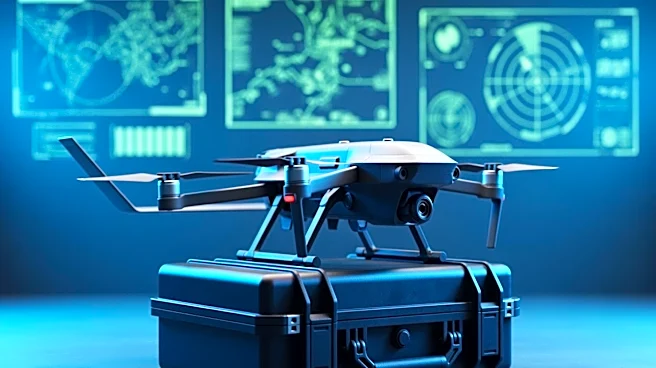
The United States Marine Corps is gearing up to integrate tens of thousands of new drones into its operations, a move that presents significant logistical and operational challenges. According to a report, the Corps is set to receive 40,000 additional
drones, which will require careful management of lithium batteries that power these devices. These batteries are volatile and need to be stored and maintained properly to prevent fires. The Marines are also focusing on training personnel to handle these drones effectively, as they are increasingly used for surveillance, resupply missions, and other tactical operations. The integration of drones is part of a broader Pentagon initiative to expand drone use across military branches, necessitating compliance with federal regulations and coordination across different drone systems.
Why It's Important?
The expansion of drone use within the Marine Corps is a critical development in modern military strategy, reflecting a shift towards more technologically advanced warfare. Drones offer significant advantages in terms of surveillance and operational flexibility, allowing for more efficient and safer military operations. However, the logistical challenges associated with managing a large fleet of drones, particularly the safe handling of lithium batteries, highlight the complexities of integrating new technologies into existing military frameworks. This development also underscores the need for specialized training and the establishment of new operational protocols to ensure that personnel can effectively utilize these advanced tools. The successful integration of drones could enhance the Marines' capabilities, but failure to address these challenges could lead to operational setbacks.
What's Next?
As the Marine Corps continues to integrate drones into its operations, it will need to establish comprehensive training programs to ensure that personnel are proficient in drone operation and maintenance. This includes developing new protocols for battery management and ensuring compliance with federal regulations governing drone use in U.S. airspace. The Corps will also need to address the technical challenges of integrating different drone systems and ensuring seamless communication between them. Future developments may include the creation of a centralized system to manage drone operations and the exploration of new technologies to enhance drone capabilities. The success of these initiatives will depend on the Corps' ability to adapt to the rapidly evolving landscape of military technology.