








What's Happening?
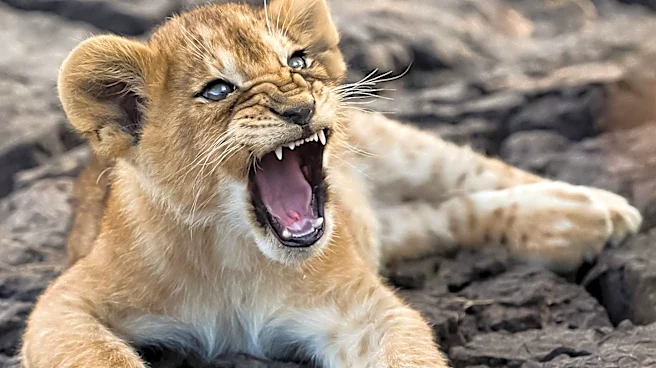
National Geographic is set to premiere a four-part docuseries titled 'Lion' on August 19, which chronicles the real-life journey of a lion cub named Kio as he navigates his path to becoming a king in Kenya. The series, executive produced by Jon Favreau
and Mike Gunton of BBC Studios Natural History Unit, aims to highlight the emotional depth, family dynamics, and unique personalities of lions. The production involved extensive filming, spanning nearly 1,400 days across 52 shoots over four years, making it the most prolonged period spent exclusively following a single lion pride. The score for the docuseries was composed by Hans Zimmer’s Bleeding Fingers Music Group, and it features narration by O.J. Lynch, who previously played Mufasa in the stage production of 'The Lion King.'
Why It's Important?
The 'Lion' docuseries is significant for its in-depth portrayal of wildlife, offering viewers an intimate look into the lives of lions and their ecosystem. By focusing on a single cub's journey, the series humanizes the animals, fostering a deeper connection and understanding of their struggles and triumphs. This approach can raise public awareness about wildlife conservation and the challenges faced by these majestic creatures, potentially influencing support for conservation efforts. The involvement of prominent figures like Jon Favreau and Hans Zimmer elevates the series' profile, attracting a wider audience and emphasizing the importance of high-quality nature documentaries. Such productions contribute to environmental education, inspiring viewers to appreciate and protect natural habitats, which has long-term implications for global biodiversity and ecological balance.
What's Next?
The 'Lion' docuseries will premiere on National Geographic on August 19, with streaming availability on Disney+ and Hulu starting August 20. Following its release, the series is expected to generate discussions around wildlife conservation and the role of documentaries in environmental advocacy. The extensive footage and compelling narrative could lead to educational initiatives or partnerships with conservation organizations. The success of 'Lion' may also encourage National Geographic and other production companies to invest in similar long-form, character-driven wildlife documentaries, further enriching the genre. Viewers can anticipate a deeper understanding of lion behavior and the intricate dynamics of their prides, potentially sparking increased interest in African wildlife and broader ecological issues.
Beyond the Headlines
The 'Lion' docuseries transcends typical wildlife programming by emphasizing the emotional and social complexities of lion prides, challenging conventional perceptions of these animals. By showcasing their vulnerability alongside their strength, the series encourages a more nuanced understanding of nature. The filmmakers' commitment to capturing authentic, unscripted moments over four years highlights the ethical considerations and patience required in wildlife filmmaking, contrasting with the increasing use of CGI in other productions. This dedication to realism underscores the irreplaceable value of observing and documenting the natural world as it truly is. The series also subtly addresses the impact of human presence by emphasizing the crew's efforts to avoid disturbing the animals, promoting a message of respectful coexistence and minimal intervention in natural habitats.