




What's Happening?
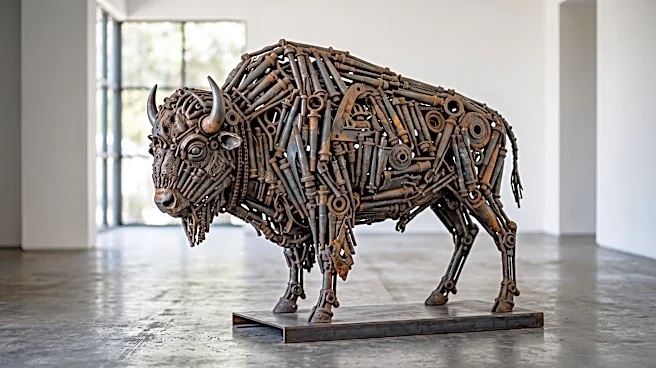
Lee Washington, an Army veteran and former agricultural power and machinery teacher from Rolling Fork, Mississippi, has gained recognition for his unique art crafted from discarded cotton-picker spindles. Washington began his artistic journey 25 years
ago, transforming these industrial parts into sculptures ranging from human figures and animals to religious symbols. His work, known as Lee’s Cotton Picker Art, is displayed in his gallery in Rolling Fork, at the EE Bass Cultural Arts Center in Greenville, and the Two Mississippi Museums in Jackson. Notably, Washington has created pieces for prominent figures, including a sculpture of Jesus carrying the cross for Congressman Bennie Thompson and an angel-themed piece for President Obama. His art repurposes materials historically linked to Black labor in the Mississippi Delta, giving them new meaning and cultural significance. Washington emphasizes the importance of being in the right mindset when creating, stating he cannot 'just throw something together.'
Why It's Important?
Lee Washington's art is significant for several reasons, particularly its connection to the cultural and historical landscape of the Mississippi Delta. By transforming cotton-picker spindles, materials deeply embedded in the region's agricultural past and the history of Black labor, Washington imbues them with new narratives and artistic value. This practice highlights the potential for repurposing industrial remnants into meaningful cultural artifacts, offering a unique perspective on the region's heritage. His work also provides a platform for discussing the legacy of the plantation economy and the contributions of African Americans in Mississippi. The recognition of his art by figures like Congressman Bennie Thompson and President Obama elevates its profile, drawing broader attention to the artistic talent within the Delta and the powerful stories his sculptures tell. This artistic endeavor contributes to the preservation and reinterpretation of local history through a creative lens, fostering cultural pride and dialogue.
What's Next?
Lee Washington's work will be featured at the 50th anniversary of the Chimneyville Arts Festival from November 12 to November 14, where he will present new pieces. This event, hosted by the Craftsmen’s Guild of Mississippi at the Bill Waller Craft Center, offers an opportunity for a wider audience to engage with his unique art. Washington has been a member of the guild since 2002, and his continued participation in such festivals suggests ongoing visibility and potential for new commissions or exhibitions. The festival will include live demonstrations and vendor sales, providing a platform for Washington to share his creative process and expand the reach of Lee’s Cotton Picker Art. His presence at this milestone event could further solidify his reputation as a significant artist in the Mississippi Delta and beyond, potentially leading to increased demand for his distinctive sculptures and further opportunities for cultural commentary through his work.
Beyond the Headlines
Beyond the immediate artistic recognition, Lee Washington's work carries deeper implications regarding the intersection of art, history, and social commentary. His use of cotton-picker spindles transcends mere artistic medium; it transforms symbols of historical labor and economic structures into objects of beauty and reflection. This act of repurposing can be seen as a form of cultural reclamation, recontextualizing tools of past hardship into expressions of resilience and creativity. The art implicitly addresses the legacy of the Delta's plantation economy and the experiences of African Americans, offering a tangible link to a complex past. Furthermore, Washington's emphasis on his emotional and spiritual state during creation highlights the therapeutic and deeply personal aspect of art, suggesting that the creative process itself can be a means of processing history and finding meaning. His work serves as a powerful reminder of how art can reinterpret historical narratives and contribute to ongoing cultural dialogues.