




What's Happening?
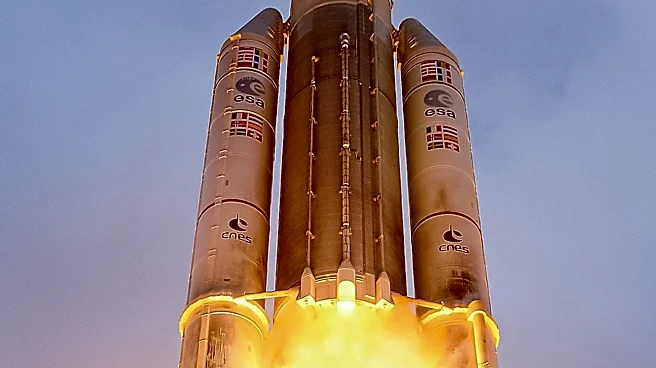
The European Space Agency (ESA) is actively overseeing the development of the Ariane 6 launch vehicle, a project initiated in December 2014. The primary motivation behind this endeavor is to sustain Europe's competitive edge in the rapidly evolving commercial
launch service market and ensure European independence in accessing and utilizing space. ESA's responsibilities include managing the procurement process and defining the overall architecture of the launch system. Industries across Europe, with ArianeGroup serving as the prime contractor and design authority, are tasked with constructing the launch vehicle and its various components. The Ariane 6 will operate from Europe's Spaceport in French Guiana, a location chosen for its strategic advantage in maximizing the speed boost from Earth's rotation, thereby enhancing payload performance. The launch vehicle is designed to be versatile, capable of deploying both heavy and light payloads into diverse orbits for applications such as Earth observation, telecommunication, meteorology, science, and navigation. It will be available in two configurations: Ariane 62 with two boosters and Ariane 64 with four boosters, offering different payload capacities.
Why It's Important?
The development of Ariane 6 is crucial for Europe's strategic autonomy in space, reducing reliance on other nations for critical launch services. This independence is vital for national security, scientific research, and economic competitiveness. By maintaining a strong presence in the commercial launch market, Europe can attract international clients, foster innovation within its aerospace industry, and create high-tech jobs. The flexibility of Ariane 6, with its ability to carry various payloads and offer 'rideshare' services for small satellites, democratizes access to space for smaller companies and research institutions, potentially accelerating technological advancements. The project also represents a significant investment in European industrial collaboration, with hundreds of companies across 13 European countries contributing to its realization. The success of Ariane 6 will reinforce Europe's position as a key player in the global space economy, influencing future trends in satellite deployment and space exploration.
What's Next?
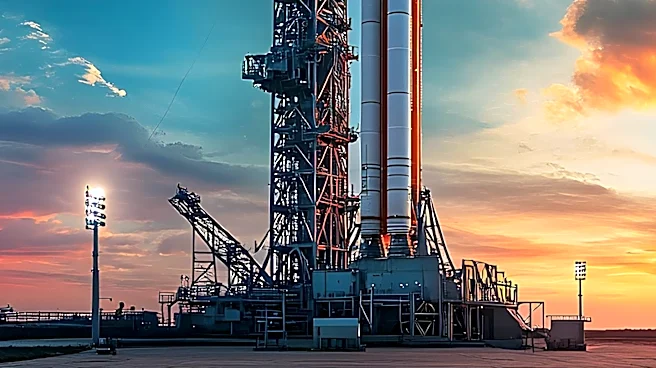
The Ariane 6 is slated for launch from a new site in French Guiana, located 4 km west of the existing Ariane 5 launch pad. This new launch zone, covering 170 hectares, includes a launcher assembly building, a mobile gantry, and the launch pad itself. The mobile gantry, a massive 90-meter-high structure, will protect Ariane 6 until its retraction before launch. After payload separation, the upper stage will perform a final burn to deorbit, minimizing space debris. ESA will continue to provide launch system requirements for institutional missions, while industry will focus on identifying and meeting commercial market demands. The program will also involve ongoing research and development, including the assessment of novel techniques and tools like AI-based approaches for fault detection, isolation, and recovery (FDIR). Continuous monitoring and improvement of FDIR concepts, methods, and documentation will be a priority, drawing lessons from operational data and mission experiences.
Beyond the Headlines
Beyond its immediate technical and commercial objectives, the Ariane 6 program embodies Europe's long-term vision for space. It highlights the intricate balance between national strategic interests and international commercial competition in the space sector. The emphasis on reducing space debris through controlled deorbiting of the upper stage reflects a growing global awareness of environmental responsibility in space. The collaborative industrial model, involving numerous European companies, strengthens regional integration and technological transfer, fostering a shared European identity in scientific and engineering endeavors. The project also underscores the critical role of government agencies like ESA in orchestrating complex, large-scale technological initiatives that have profound implications for economic growth, scientific discovery, and geopolitical influence. The success of Ariane 6 could set a precedent for future multinational collaborations in high-tech sectors, demonstrating the power of collective effort in achieving ambitious goals.