What's Happening?
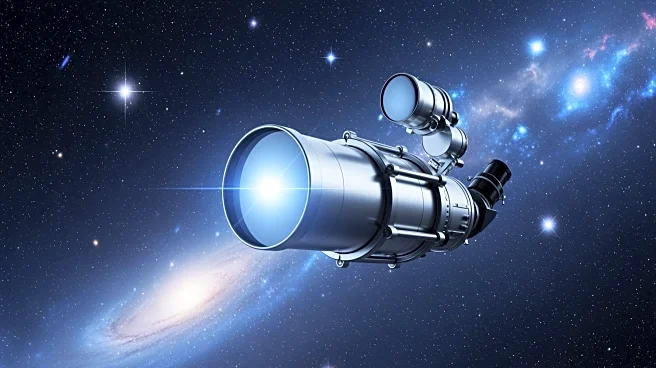
The Hubble Space Telescope recently encountered a hardware issue with its primary science instrument, which was resolved by engineers who identified erroneous telemetry data as the cause. This incident
highlights ongoing challenges faced by space-based observatories due to the increasing number of satellite megaconstellations. A study published in Nature indicates that 4.3% of Hubble's images from 2018 to 2021 were affected by artificial satellite trails. With companies like SpaceX and governments planning to launch thousands more satellites, the impact on astronomical observations is expected to grow significantly.
Why It's Important?
The proliferation of satellite megaconstellations poses a significant threat to space-based astronomy. As more satellites are launched, the likelihood of their reflections contaminating astronomical images increases, potentially hindering scientific research. This development could affect various observatories, including NASA's SPHEREx and ESA's ARRAKIHS. The issue underscores the need for mitigation strategies to preserve the integrity of astronomical data, which is crucial for understanding the universe and advancing scientific knowledge.
What's Next?
Efforts to mitigate the impact of satellite megaconstellations on astronomical observations are ongoing. Companies like SpaceX are working on brightness mitigation techniques and collaborating with the astronomy community to develop best practices. However, the effectiveness of these measures remains uncertain, and further research is needed to address the challenges posed by the increasing number of satellites in low Earth orbit.
Beyond the Headlines
The situation raises ethical and regulatory questions about the balance between technological advancement and the preservation of scientific research. As satellite launches continue to increase, international cooperation and policy development may be necessary to ensure that space remains a viable environment for scientific exploration.