






What's Happening?
Vibe coding, a method of using plain English to instruct AI tools, is gaining traction across various demographics, including children and retirees. The practice, popularized by Andrej Karpathy, allows users to create applications without traditional
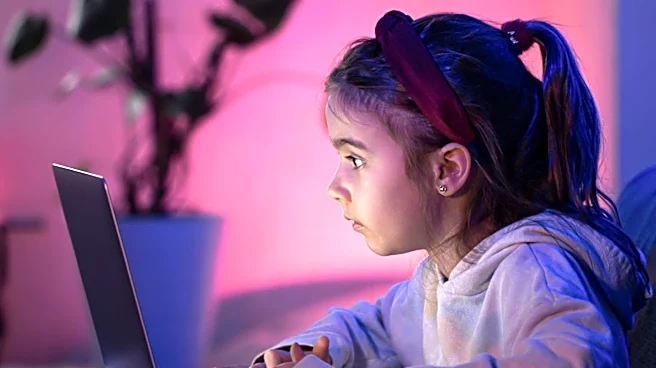
coding knowledge. Lena Hall, a senior director at Akamai, demonstrated this by enabling her 5-year-old son to build a game using OpenAI's Codex in just 20 minutes. Similarly, 13-year-old Usman Asif learned vibe coding through a workshop and has since participated in hackathons, creating AI-powered tools. The trend is not limited to the young; Lewis Dickson, a 78-year-old retiree, has embraced vibe coding, challenging stereotypes about older adults and technology. This approach is democratizing access to technology, allowing non-technical individuals to engage with AI development.
Why It's Important?
The rise of vibe coding represents a significant shift in how technology is accessed and utilized. By lowering the barrier to entry, it enables a broader range of people to participate in tech innovation, fostering inclusivity and diversity in the field. This democratization could lead to a surge in creative applications and solutions, as individuals from varied backgrounds bring unique perspectives to AI development. It also highlights the evolving nature of coding and the potential for AI tools to simplify complex processes, making technology more accessible to the general public. As more people engage with vibe coding, it could drive advancements in educational methods and tech literacy.