

What's Happening?
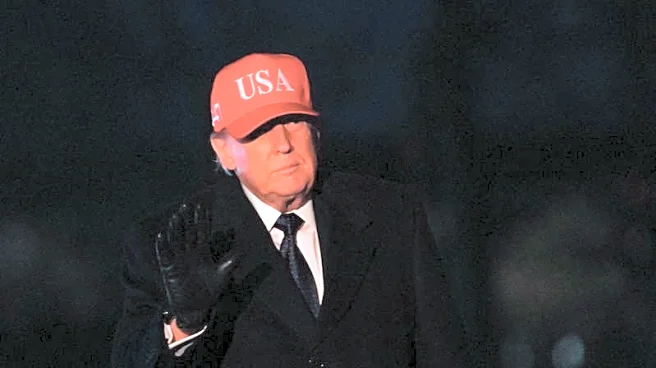
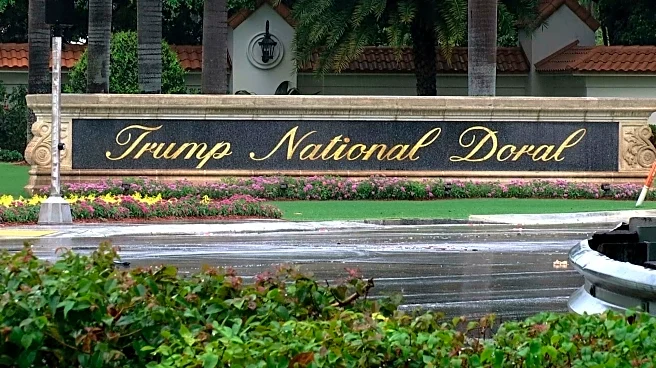
President Trump hosted a summit at his Miami resort, named the 'Shield of the Americas,' aimed at strengthening U.S. influence in the Western Hemisphere and combating violent cartels. The summit was attended by leaders from several Latin American countries,
including Argentina, Bolivia, Chile, Costa Rica, the Dominican Republic, Ecuador, El Salvador, Guyana, Honduras, Panama, Paraguay, and Trinidad and Tobago. The event marked the launch of the 'Americas Counter Cartel Coalition,' a new military partnership designed to tackle drug cartels and criminal gangs. Trump emphasized the use of military power, including potential missile strikes, to defeat these enemies. The summit is part of a broader strategy described as the 'Trump Corollary' to the Monroe Doctrine, focusing on preventing external influence in the Americas.
Why It's Important?
The summit signifies a renewed U.S. focus on Latin America, highlighting the strategic importance of the region in combating drug trafficking and organized crime. By forming the 'Americas Counter Cartel Coalition,' the U.S. aims to strengthen military and security ties with Latin American countries, potentially altering the geopolitical landscape. This initiative could lead to increased U.S. military involvement in the region, impacting local politics and economies. The absence of major countries like Brazil, Mexico, and Colombia, led by left-leaning presidents, suggests potential political tensions and differing approaches to regional security issues.
What's Next?
The establishment of the 'Americas Counter Cartel Coalition' may lead to increased military collaboration and operations targeting drug cartels in Latin America. The U.S. could see heightened diplomatic efforts to engage with countries not present at the summit, such as Brazil, Mexico, and Colombia, to foster broader regional cooperation. The initiative may also prompt reactions from other global powers with interests in Latin America, potentially influencing international relations and trade dynamics.
Beyond the Headlines
The summit's focus on military solutions to drug trafficking raises ethical and legal questions about sovereignty and the use of force in foreign territories. The potential for U.S. missile strikes, as suggested by President Trump, could lead to debates over international law and human rights. Additionally, the initiative may influence domestic politics in Latin American countries, affecting public opinion and electoral outcomes. The long-term success of the coalition will depend on its ability to address the root causes of drug trafficking, such as poverty and corruption, beyond military interventions.