










What's Happening?
The Middletown School Committee recently discussed a decline in student enrollment, with a district official reporting a total of 1,782 students. The district has observed an annual loss of approximately 100 students over the past two years, though this
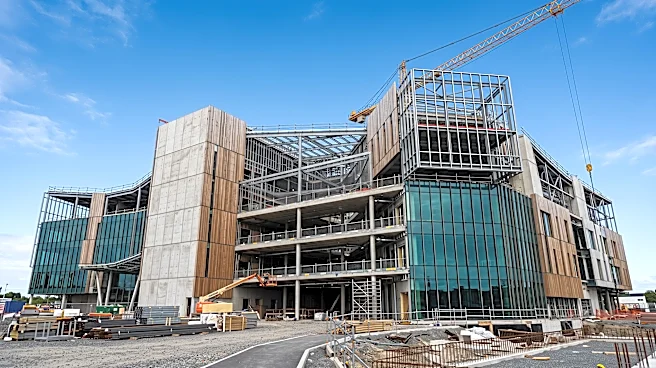
year's decline was noted as smaller. A committee member highlighted that the number of homeschooled students, currently 79, is nearly equivalent to the district's overall student loss. This led to a discussion about whether the enrollment dip undermines the ongoing construction of new schools. The official clarified that homeschooling figures are dynamic due to graduating cohorts and new families moving in, particularly military families who sometimes opt for homeschooling upon arrival. The committee member suggested that many homeschooled students might re-enroll once the new facilities are completed, especially given the district's career and technical education programs. The new schools were designed based on a 10-year enrollment projection by the Rhode Island Department of Education (RIDE), indicating that current enrollment figures are within the scope of the long-term plan.
Why It's Important?
This situation is important for Middletown residents and taxpayers as it directly relates to the justification and financial investment in new school infrastructure. The debate over declining enrollment versus new construction highlights concerns about resource allocation and future educational capacity. If a significant portion of homeschooled students were to return, as suggested, it could validate the long-term enrollment projections and the need for expanded facilities. Conversely, if enrollment continues to decline, it could lead to questions about the efficiency and necessity of the new schools, potentially impacting property values and local taxes. The discussion also touches upon the broader trend of homeschooling and its impact on public school systems, particularly in areas with a transient population like military families. The district's ability to attract and retain students, including those currently homeschooled, will be crucial for the success and utilization of the new educational facilities.
What's Next?
No vote was taken on the enrollment matter during the meeting, as the remarks were part of a report. The Middletown School Committee will likely continue to monitor enrollment trends closely, especially as the new schools approach completion. The district may explore strategies to re-engage homeschooled students and attract new families, potentially by highlighting the benefits of the new facilities and specialized programs like career and technical education. The ongoing construction of the new schools will proceed based on the 10-year enrollment projections established by RIDE. Future discussions may involve more detailed plans for student recruitment and retention, as well as continued updates on the financial implications of the new school buildings in relation to actual student numbers.
Beyond the Headlines
The discussion in Middletown reflects a broader national challenge faced by many school districts: balancing current enrollment fluctuations with long-term infrastructure planning. The issue of homeschooling, particularly among military families, introduces a unique demographic factor that can significantly impact local school populations. This situation also underscores the importance of transparent communication between school committees and the community regarding major capital projects. The perception that new schools are being built amidst declining student numbers can erode public trust and lead to skepticism about financial prudence. The committee's emphasis on the 10-year projection by RIDE attempts to provide a strategic rationale, but the immediate optics of fewer students and new buildings can be a point of contention. This scenario highlights the complex interplay between demographic shifts, educational policy, and community investment in public infrastructure.