



What's Happening?
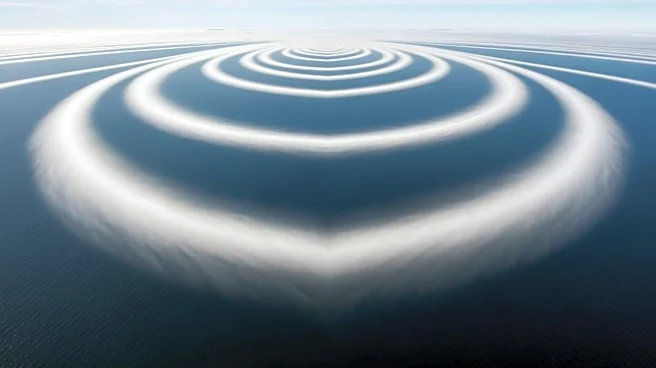
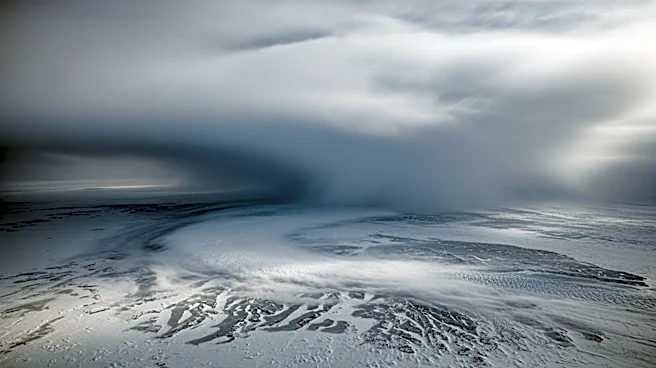
NASA satellites captured striking images of a rare arctic storm over southern Alaska, marking the end of winter 2026 with colder-than-average temperatures and heavy snowfall. The atmospheric instability was highlighted by the formation of 'cloud streets'
over the Gulf of Alaska, a phenomenon where cold, dry air flows over warmer waters, creating long, parallel bands of clouds. This setup was driven by a low-pressure system over the Gulf and high pressure across eastern Russia and northern Alaska, pushing frigid Arctic air southeastward. The storm system, identified as a polar low, reached tropical storm-force winds, generating snow and thunderstorms near its center. The event is part of a broader pattern of persistent cold and stormy weather in Alaska, with more unsettled conditions expected as an atmospheric river approaches.
Why It's Important?
The occurrence of such rare arctic storms underscores the increasing volatility in weather patterns, potentially linked to broader climate changes. These conditions can have significant impacts on local ecosystems, infrastructure, and communities in Alaska. The ability to predict and understand these atmospheric phenomena is crucial for preparing and mitigating the effects of severe weather. The data collected by NASA and NOAA can aid in improving weather forecasting models, which are essential for public safety and planning. Additionally, the study of these storms contributes to the broader understanding of climate dynamics in polar regions, which are experiencing some of the most rapid changes due to global warming.
What's Next?
As the atmospheric river approaches, Alaska is expected to experience continued wet and unsettled weather. Meteorologists and climate scientists will likely continue to monitor these conditions closely, using satellite data to refine predictive models. The insights gained from this storm could inform future research and policy decisions related to climate adaptation and resilience in Arctic and sub-Arctic regions. Stakeholders, including government agencies and local communities, may need to consider strategies for dealing with increased weather variability and its associated risks.