
What's Happening?
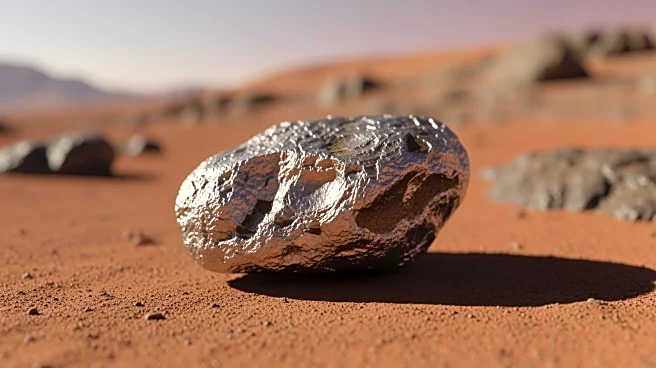
NASA's Perseverance rover, which has been exploring Mars since February 2021, has discovered a meteorite in the Jezero Crater. This find is significant as it marks the first time Perseverance has identified
a meteorite during its mission to search for signs of life on Mars. The meteorite, named Phippsaksla, was identified due to its unique appearance and composition, which includes high levels of nickel and iron, typical of meteorites originating from asteroids. This discovery is crucial for scientists as it provides an opportunity to study the meteorite's composition and gain insights into the history and behavior of meteorites on Mars.
Why It's Important?
The discovery of a meteorite by Perseverance is important for several reasons. Firstly, it enhances our understanding of Mars and the solar system's history. Meteorites can contain ancient materials, offering clues about the early solar system. Additionally, studying meteorites on Mars helps scientists understand how these space rocks interact with the Martian environment, which is different from Earth's. This knowledge is vital for future missions and could inform strategies for potential human exploration of Mars. The find also underscores the capabilities of the Perseverance rover in conducting complex scientific investigations on another planet.
What's Next?
Following the identification of the meteorite, NASA scientists will likely conduct further analyses to confirm its origin and composition. This could involve detailed imaging and chemical analysis using the rover's onboard instruments. The findings may lead to new research on the implications of meteorite impacts on Mars and their role in shaping the planet's surface. Additionally, the data collected could contribute to broader studies on the potential for life on Mars and the planet's geological history. The continued success of Perseverance in its mission may also influence the planning and objectives of future Mars exploration missions.