

What's Happening?
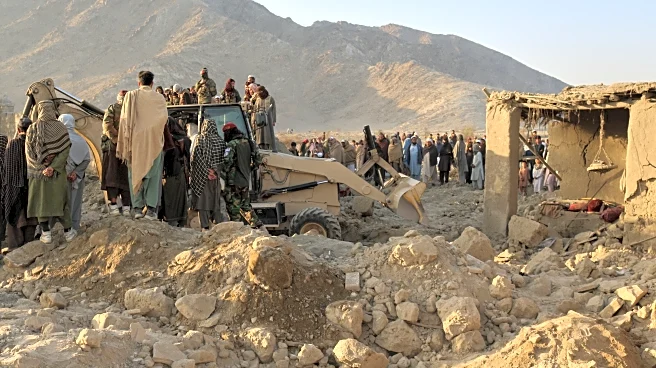
Pakistan's military conducted airstrikes along the Afghan border, reportedly killing at least 70 militants. These strikes targeted hideouts of Pakistani militants blamed for recent attacks within Pakistan, including a suicide bombing at a Shiite mosque
in Islamabad that killed 31 people. The Afghan government, however, claims that the strikes resulted in civilian casualties, including women and children, and has rejected Pakistan's assertions. The strikes have further strained relations between Pakistan and Afghanistan, with the Afghan government summoning Pakistan's ambassador to protest the violation of its airspace and sovereignty. The Pakistani government insists that the strikes were necessary to ensure the safety and security of its citizens, accusing the Afghan Taliban of harboring militants responsible for attacks in Pakistan.
Why It's Important?
The airstrikes highlight the ongoing security challenges in the region and the fragile nature of the ceasefire between Pakistan and Afghanistan. The situation underscores the complex dynamics of cross-border militancy and the difficulties in maintaining peace and stability. The strikes could potentially escalate tensions between the two countries, affecting regional security and diplomatic relations. The international community's response, particularly in urging Afghanistan to prevent its territory from being used for attacks against Pakistan, will be crucial in addressing these tensions. The incident also raises concerns about civilian safety and the humanitarian impact of military operations in conflict zones.
What's Next?
The immediate future may see increased diplomatic efforts to de-escalate tensions, with potential involvement from international mediators. Pakistan may continue to press Afghanistan to take action against militant groups operating from its soil. The Afghan government, on the other hand, may seek international support to address what it perceives as violations of its sovereignty. The situation could lead to further military actions if diplomatic efforts fail, potentially destabilizing the region further. Monitoring the responses from both governments and the international community will be key to understanding the evolving dynamics.