


What's Happening?
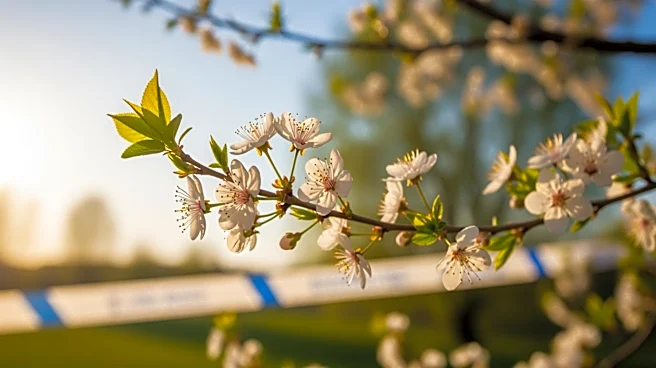
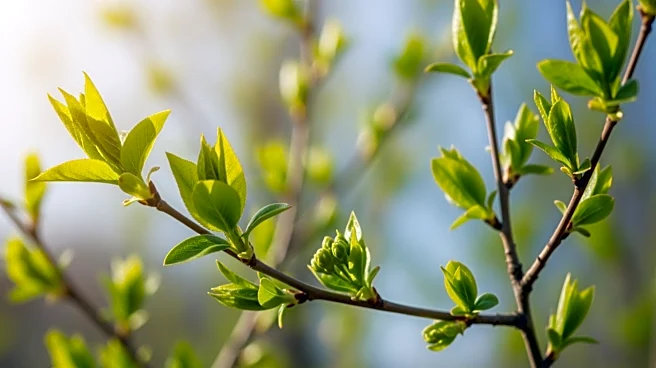
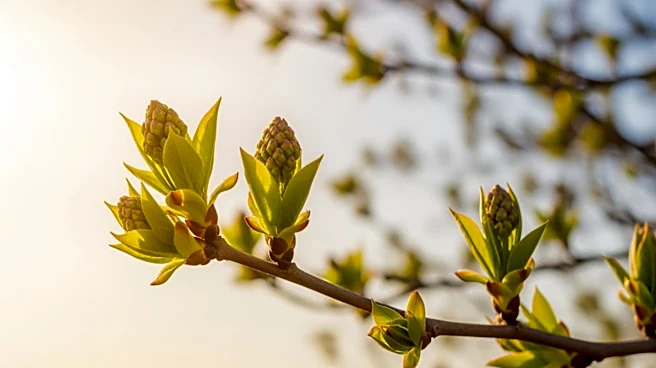
March 2026 was the warmest on record across the United States, with temperatures averaging 7 degrees above normal. This unseasonable warmth has led to early blooming of flowers and leaf emergence, particularly in the Mid-Atlantic and Central states. According
to the USA National Phenology Network, leaves have emerged two to four weeks earlier than usual in many areas, affecting about 190 million people. The early onset of spring is evident with cherry blossoms in full bloom in Washington D.C. and other northern cities on the verge of seeing spring leaves. This phenomenon is attributed to climate change, which is causing more frequent deviations from normal seasonal patterns.
Why It's Important?
The early arrival of spring has significant ecological and economic implications. It affects agricultural cycles, potentially leading to mismatches in pollination and increased vulnerability to late frosts, which can damage crops. The early bloom also impacts allergy sufferers, as pollen levels rise sooner than expected. This event underscores the broader impacts of climate change on natural systems and human activities, highlighting the need for adaptive strategies in agriculture and urban planning to mitigate these effects.