








What's Happening?
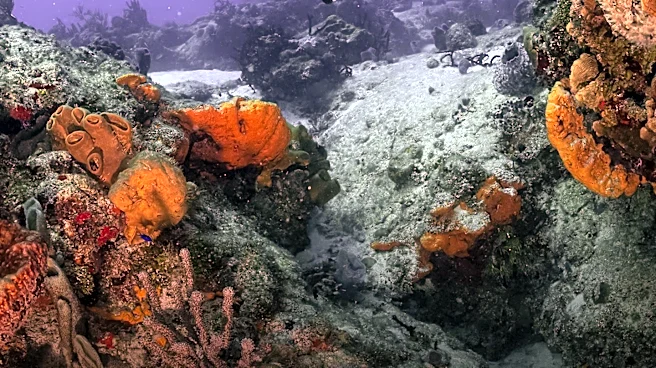
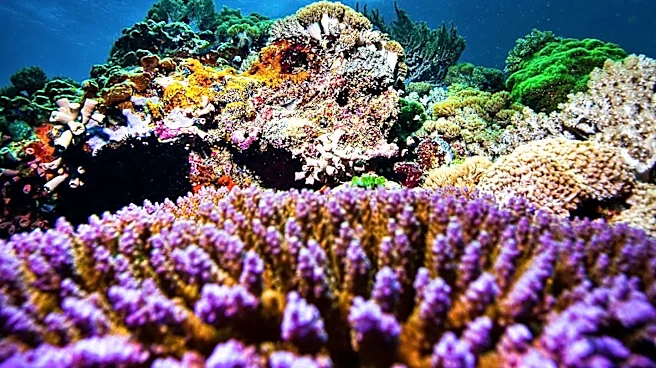
A coral reef, long presumed dead, has been rediscovered off the coast of West Africa, teeming with life. Initially identified in the 1960s, the reef was thought to be dead until recent sonar surveys revealed its existence. The reef, located in the Gulf
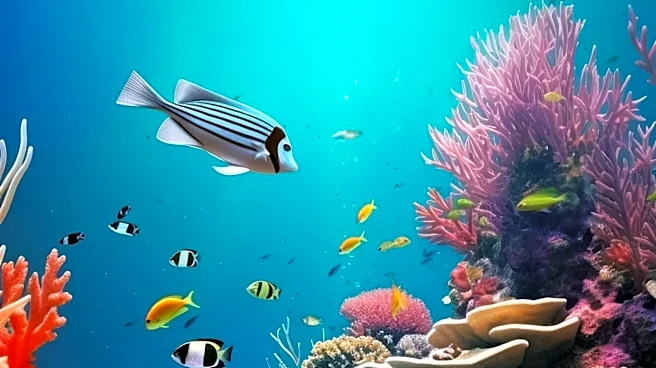
of Guinea, is a mesophotic coral ecosystem, characterized by its depth and limited light exposure. The discovery was made by a team from the Institute of Halieutic and Oceanographic Research in Benin, who used modern technology to confirm the reef's vitality. The reef hosts a variety of coral and fish species, indicating a healthy marine ecosystem.
Why It's Important?
The rediscovery of this coral reef is significant for marine conservation efforts, as it highlights the resilience of coral ecosystems in the face of environmental challenges. This finding suggests that other presumed-dead reefs might still exist, offering new opportunities for biodiversity preservation. The reef's existence underscores the importance of continued exploration and monitoring of marine environments, particularly in under-researched regions like West Africa. Understanding the resilience mechanisms of such ecosystems could inform global strategies for coral conservation amid climate change and human impact.