






What's Happening?
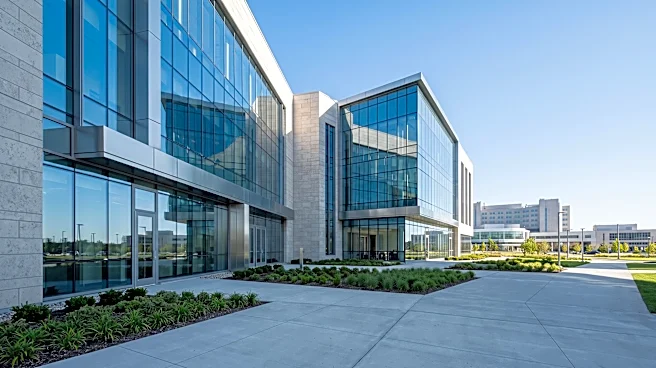
Senator Roger Wicker (R-Miss.) has underscored Mississippi's significant advancements in healthcare, particularly the groundbreaking of a new Cancer Center and Research Institute at the University of Mississippi Medical Center (UMMC) in Jackson. This
facility is a crucial step towards achieving a National Cancer Institute (NCI) designation, a prestigious federal recognition for premier cancer treatment and research centers. Senator Wicker noted his involvement in organizing meetings between UMMC and NCI leadership to guide the application process. Additionally, he highlighted recent federal investments, totaling over $17 million, secured with Senator Cindy Hyde-Smith, for maternal health, telehealth, radiation oncology, and drug manufacturing across the state. These efforts build upon the $137 million already brought to Mississippi through the Rural Health Transformation Program (RHTP).
Why It's Important?
These healthcare initiatives are profoundly important for Mississippi, a state with a cancer death rate 25 percent higher than the national average. The new UMMC Cancer Center aims to reduce this disparity by providing advanced treatment and research capabilities, potentially saving lives and improving patient outcomes. Achieving NCI designation would elevate Mississippi's medical research profile, attract top talent, and foster a talent pipeline within the state. The federal investments in rural health, including the RHTP, are critical for modernizing medical technology, expanding services, and strengthening the healthcare workforce in underserved areas. These combined efforts are designed to address long-standing health disparities, improve access to quality care, and set Mississippi on a positive trajectory for public health and economic development.
What's Next?
The construction of the new Cancer Center and Research Institute at UMMC will continue, with the long-term goal of securing NCI designation. This process involves years of investment, research activity, and rigorous federal evaluation. Senator Wicker has pledged his continued support to UMMC throughout this journey. Concurrently, the recently secured federal funds for maternal health, telehealth, radiation oncology, and drug manufacturing will be deployed across Mississippi, enhancing various aspects of the state's healthcare infrastructure. The ongoing implementation of the Rural Health Transformation Program will continue to empower local healthcare providers with resources to address their specific needs, further strengthening the state's healthcare system.
Beyond the Headlines
Mississippi's ambitious healthcare agenda, championed by Senator Wicker, reflects a broader national focus on addressing health disparities and improving access to advanced medical care, particularly in rural and underserved regions. The pursuit of NCI designation for UMMC is not merely about a building; it represents a strategic investment in human capital, scientific innovation, and long-term public health. This initiative could transform Mississippi into a regional leader in cancer research and treatment, attracting both patients and medical professionals. Furthermore, the emphasis on bottom-up strategies like the RHTP highlights a shift towards empowering local communities to tailor healthcare solutions, recognizing that effective healthcare reform requires understanding and addressing unique regional challenges rather than imposing one-size-fits-all solutions. This comprehensive approach has the potential to create a more resilient and equitable healthcare system.