
What's Happening?
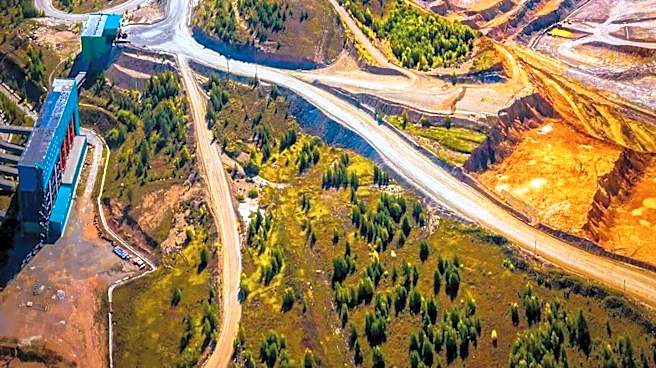
Texas Land Commissioner Dawn Buckingham (R) has emphasized the significant potential of the Round Top rare earth deposit in Hudspeth County, Texas. This deposit, located on state-owned land, is being positioned
as a dual solution to secure essential materials domestically and generate substantial funding for Texas public education. According to Buckingham, the development of Round Top could provide tens of billions of dollars for the Permanent School Fund, which supports K-12 public education, and supply critical minerals for approximately 100 years. The initiative aims to reduce the United States' dependence on China, which currently controls a dominant share of global rare earth refining output. USA Rare Earth, the company involved, is targeting commercial production at Round Top by late 2028, with processing facilities planned in Colorado and a magnet manufacturing facility in Stillwater, Oklahoma. Buckingham views domestic production of these minerals as a national security priority and is encouraging developers to process the materials within the U.S. rather than sending them to China.
Why It's Important?
The development of the Round Top rare earth deposit holds significant importance for both national security and economic reasons. China's near-monopoly, accounting for 91% of global refining output for magnet rare earths in 2024, creates a critical vulnerability for the U.S. in various high-tech and defense industries. Rare earth minerals are essential components in modern technologies, including cell phones and jet engines. By developing domestic sources like Round Top, the U.S. can enhance its supply chain resilience, reduce geopolitical risks associated with foreign dependence, and bolster its manufacturing capabilities. Economically, the project promises a substantial boost to Texas's education system through bonus payments and royalties directed to the Permanent School Fund. This could alleviate pressure on property owners and provide a stable, long-term funding source for schools. Furthermore, the establishment of processing and manufacturing facilities within the U.S. (Colorado and Oklahoma) will create jobs and foster technological expertise, contributing to a more robust domestic industrial base.
What's Next?
The immediate next step for the Round Top project is for USA Rare Earth to continue its development efforts, targeting commercial production by late 2028. This will involve further investment in mining infrastructure, the establishment of processing facilities in Colorado, and the operationalization of the magnet manufacturing facility in Stillwater, Oklahoma. Texas Land Commissioner Buckingham will likely continue to advocate for policies that support domestic rare earth production and processing, emphasizing its benefits for both national security and state education funding. The success of this project could serve as a model for other states and private entities looking to tap into domestic critical mineral resources. Stakeholders, including the Texas General Land Office and the Permanent School Fund, will monitor the project's progress closely, anticipating the projected tens of billions of dollars in revenue. The broader U.S. government and industry will also be watching to see if this initiative effectively reduces reliance on Chinese rare earth supply chains.
Beyond the Headlines
The Round Top project transcends a simple mining operation, touching upon deeper implications for U.S. strategic autonomy and economic diversification. Ethically, it raises questions about responsible resource extraction and environmental stewardship, particularly given the long-term nature of the proposed 100-year supply. The push for domestic processing, rather than exporting raw materials, signifies a shift towards capturing more value within the U.S. economy, fostering innovation, and developing a skilled workforce in advanced materials. Culturally, the narrative of 'Made in America' for critical components could resonate, strengthening national pride and confidence in domestic industrial capabilities. This initiative also highlights the evolving role of state-level leadership in addressing national strategic challenges, with Texas leveraging its natural resources to contribute to federal goals of supply chain security. The long-term success of such projects could fundamentally alter global rare earth dynamics, potentially leading to a more diversified and resilient international supply landscape, reducing the leverage of any single dominant producer.