






What's Happening?
Students from the College of Agriculture, Food and Rural Enterprise (CAFRE) recently embarked on a study tour to Scotland, where they explored a variety of modern and progressive farming systems. The tour, part of their Level 3 Advanced Technical Extended
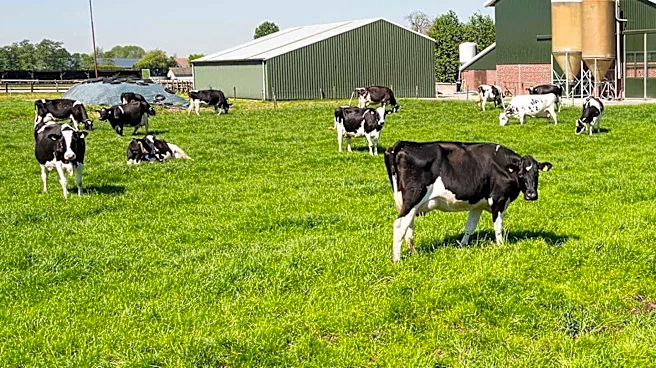
Diploma in Agriculture, provided insights into innovative practices across several livestock systems. Key visits included Myremill Farm, which has adopted robotic milking systems to enhance dairy production, and Darnlaw Farm, where selective breeding and genetics play a crucial role in herd development. The students also visited Parkend Farm, which has transitioned to robotic milking to improve efficiency and work-life balance, and Over Finlarg, a diverse hill farming enterprise. The tour concluded at West Galdenoch Farm, a large-scale dairy operation focusing on high milk yields and quality. These visits highlighted the importance of technology adoption, genetics, and large-scale farm management in modern agriculture.
Why It's Important?
The study tour is significant as it exposes future agricultural professionals to cutting-edge practices that can enhance productivity and sustainability in farming. By witnessing the integration of technology such as robotic milking systems, students gain firsthand experience of how automation can address labor challenges and improve efficiency. The emphasis on genetics and selective breeding at farms like Darnlaw and Parkend underscores the potential for improving livestock quality and profitability. These insights are crucial as the agricultural industry faces increasing pressure to produce more with fewer resources while minimizing environmental impact. The knowledge gained from such tours can help shape the future of farming, encouraging the adoption of innovative practices that can lead to more sustainable and efficient agricultural systems.
What's Next?
As these students complete their studies, they are likely to carry forward the lessons learned from the tour into their future careers, whether in further education, employment, or managing their own farms. The exposure to advanced farming techniques may inspire them to implement similar innovations in their practices, contributing to the evolution of the agricultural sector. Additionally, the connections made during the tour could foster collaborations and knowledge exchange between the students and the farms they visited, further promoting the spread of progressive farming methods.