
What's Happening?
September 2026 is set to offer a series of celestial events for stargazers. The full moon, known as the Harvest Moon, will occur on September 26 at 12:49 p.m. EDT, glowing opposite the sun. This month will also feature several planetary encounters, including
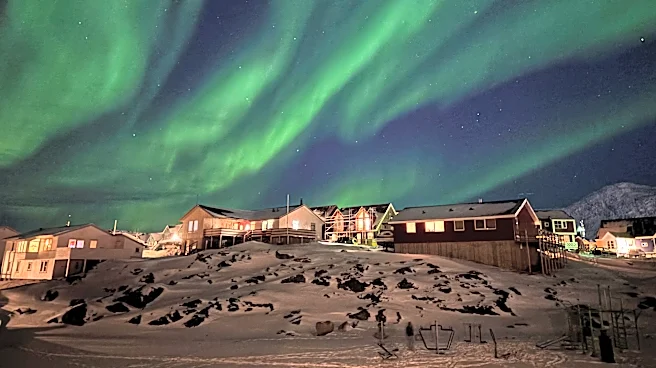
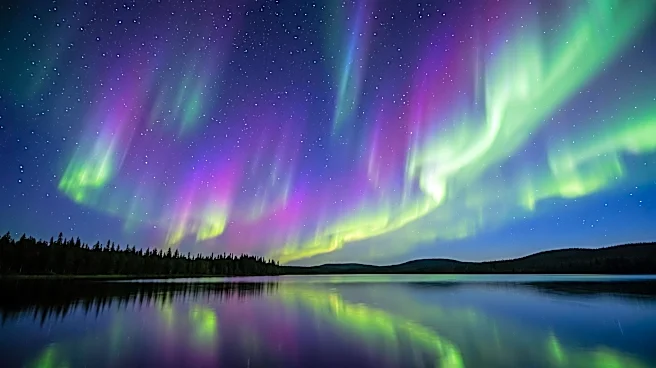
the Moon near Mars on September 6, a lunar-Jupiter occultation on September 8 visible from specific regions, and a Moon-Venus occultation on September 14. Additionally, the September equinox will take place on September 22, marking the beginning of astronomical autumn in the Northern Hemisphere. Increased chances for auroras are also predicted due to the Russell-McPherron and Equinoctial effects.
Why It's Important?
These celestial events provide unique opportunities for public engagement with astronomy and contribute to a broader understanding of our solar system's dynamics. The Harvest Moon, with its traditional significance, connects cultural heritage with astronomical phenomena. Planetary conjunctions and occultations offer rare visual spectacles that can be observed with the naked eye or basic optical aid, fostering interest in science and space. The increased likelihood of auroras, driven by specific geomagnetic conditions, highlights the Earth's interaction with solar activity, which has implications for space weather and technological systems. These events collectively serve as natural laboratories for both amateur and professional astronomers.
What's Next?
Stargazers are encouraged to prepare for these events by checking local moonrise and moonset times, as well as visibility maps for occultations. Apps like Stellarium or SkySafari 7 Pro can assist in planning observations. For the Harvest Moon, observing it near the horizon will offer a unique orange glow due to Rayleigh scattering and the 'Moon Illusion.' Saturn will be visible near the Moon on September 27, and early risers can spot Jupiter and Mars. Those in higher latitudes should monitor space weather forecasts for optimal aurora viewing. Astrophotography enthusiasts can also utilize these events to capture stunning images of the night sky.
Beyond the Headlines
The recurring cycle of celestial events, such as the Harvest Moon and equinox, has historically influenced human cultures, agriculture, and navigation. These events continue to serve as reminders of our planet's place within the vast cosmos and the intricate dance of celestial bodies. The scientific explanations behind phenomena like Rayleigh scattering and geomagnetic effects deepen our appreciation for the physical laws governing the universe. Furthermore, the accessibility of these events to the general public, often without specialized equipment, promotes scientific literacy and a sense of wonder, bridging the gap between complex astronomical research and everyday experience.