
What's Happening?
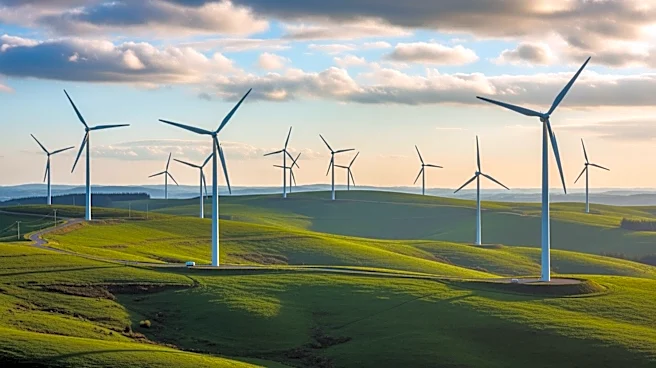
A report by UK energy consultancy Xodus and Subsea 7 highlights that Europe's offshore wind capacity is expanding faster than grid infrastructure can accommodate, potentially leading to significant energy wastage.
The study, titled 'Offshore Co-Location: Batteries and Beyond for Net Zero,' suggests that without intervention, annual curtailment could exceed 300 terawatt-hours by 2040, up from 72 terawatt-hours in 2024. The report advocates for co-located offshore storage as a scalable solution to reduce curtailment and ease grid bottlenecks. It emphasizes the need for technological deployment, commercial viability, and policy reform to manage these challenges effectively.
Why It's Important?
The rapid expansion of offshore wind capacity in Europe presents both opportunities and challenges. While it contributes to clean energy generation, the lack of adequate grid infrastructure could result in wasted electricity and financial losses. The report's findings underscore the importance of integrating energy storage solutions to maximize the value of generated wind power and enhance energy security. Addressing grid bottlenecks is crucial for realizing the full potential of offshore wind energy and achieving net-zero targets. The study also calls for policy reforms to incentivize the use of storage and optimize energy system benefits.
What's Next?
To address the grid bottlenecks, the report outlines a roadmap to 2040, focusing on deploying offshore-adapted lithium-ion batteries and long-duration storage solutions. These measures aim to complement grid upgrades and manage constraints while larger transmission projects are underway. The report also suggests revising the UK's contracts for difference model to encourage storage use. As the offshore wind sector evolves, stakeholders will need to collaborate on technological innovations and policy changes to ensure sustainable growth and energy security.