




What's Happening?
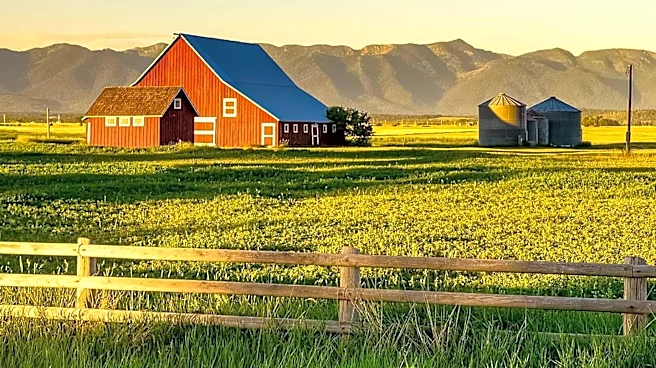
The Burkenpas family is actively preserving the 150-year agricultural heritage of the Huffine Ranch in Bozeman, Montana, despite rapid urban development encroaching on its borders. The ranch, which has been in agricultural production since the late 1800s
and was placed in a conservation easement by previous owners in 1997, now sits directly on the edge of Bozeman city limits. The Burkenpases are employing modern techniques like intensive cell grazing for their 45 weaned calves, which has already shown positive impacts on pasture health. They also maintain beef cattle, horses, and dairy cows, and are restoring historical structures on the property, including a 21-sided silo from the 1910s and a cow barn. This effort contrasts sharply with the surrounding area, where Gallatin County has seen a significant decrease in agricultural land and a boom in housing and commercial development, with the population of Bozeman growing substantially.
Why It's Important?
This situation highlights the growing tension between urban expansion and agricultural land preservation in the U.S., particularly in rapidly developing regions. The Huffine Ranch serves as a critical example of how conservation easements can protect valuable farmland from development, yet the surrounding growth still presents challenges, such as water access issues and increased traffic. The Burkenpases' commitment to sustainable farming practices, like intensive cell grazing, demonstrates innovative approaches to maintaining agricultural viability in a changing environment. Their efforts to educate the public about farming also underscore the importance of connecting urban populations with their food sources and agricultural heritage, which is often lost in the face of urbanization.
What's Next?
The Burkenpases plan to diversify their farm business by raising pigs and obtaining state certification to sell cuts of meat and animal shares directly to consumers. They also aim to expand their herd and offer custom grazing services to improve soil health on other private lands in the Gallatin Valley. While they currently work off-farm jobs, their long-term goal is for farming to be their primary income source. The ongoing development around the ranch, including large housing projects, will continue to pose challenges, particularly concerning water resources and potential road expansions. The family's engagement with neighbors and plans for informational signs along their fence aim to foster understanding and appreciation for their agricultural operations.
Beyond the Headlines
The story of the Huffine Ranch reflects a broader national dialogue about land use, food security, and the future of family farms. The preservation of historical agricultural properties, even as urban centers expand, offers a tangible link to the past and a model for sustainable land management. The challenges faced by the Burkenpases, such as water table drops due to nearby construction and increased traffic, illustrate the complex environmental and logistical impacts of unchecked development. Their dedication to maintaining a working farm and educating the community speaks to the cultural value of agriculture and the importance of local food systems in an increasingly urbanized society. This narrative also touches on the economic pressures that often force farmers to sell land for development, making the Burkenpases' commitment to their heritage even more significant.