


What's Happening?
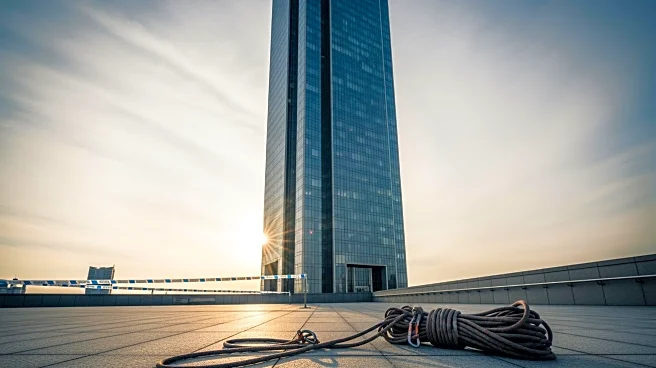
Alex Honnold, a renowned rock climber from California, successfully climbed the Taipei 101 skyscraper without the use of ropes or protective equipment. The climb took place on Sunday and was completed in approximately 90 minutes. Honnold, who is famous
for his ropeless ascent of El Capitan in Yosemite National Park, used small L-shaped outcroppings as footholds and maneuvered around large ornamental structures on the building. The climb was broadcast live on Netflix with a slight delay, drawing significant attention and raising ethical questions about the safety of such high-risk endeavors. Honnold's climb was initially scheduled for Saturday but was postponed due to rain. This feat makes him the first person to climb the Taipei 101 without ropes, following French climber Alain Robert's ascent with ropes in 2004.
Why It's Important?
Honnold's climb highlights the ongoing fascination and controversy surrounding extreme sports and their portrayal in media. The live broadcast of such a dangerous activity raises ethical concerns about the potential for accidents and the responsibility of media platforms in promoting high-risk behavior. This event also underscores the growing interest in free solo climbing, a sport that combines physical prowess with significant risk. The successful climb could inspire more climbers to attempt similar feats, potentially leading to increased incidents and discussions about safety regulations in extreme sports. Additionally, the event draws attention to the role of media in shaping public perception of risk and adventure.
What's Next?
Following Honnold's successful climb, there may be increased scrutiny on the safety measures and ethical considerations of broadcasting high-risk sports. Media platforms might face pressure to implement stricter guidelines for live broadcasts of dangerous activities. Climbing organizations and safety advocates could call for more comprehensive safety protocols to protect climbers and spectators. Additionally, Honnold's achievement may inspire other climbers to attempt similar feats, potentially leading to a rise in free solo climbing attempts on iconic structures worldwide. This could prompt discussions about the need for regulations to ensure climber safety and public safety during such events.
Beyond the Headlines
The event raises broader questions about the cultural fascination with extreme sports and the boundaries of human capability. It challenges societal norms regarding risk-taking and the pursuit of personal achievement. The climb also highlights the potential for media to influence public perception and behavior, as well as the ethical responsibilities of broadcasters in promoting or discouraging high-risk activities. As free solo climbing gains popularity, there may be a shift in how society views adventure sports, balancing admiration for human achievement with concerns for safety and ethical broadcasting.