







What's Happening?
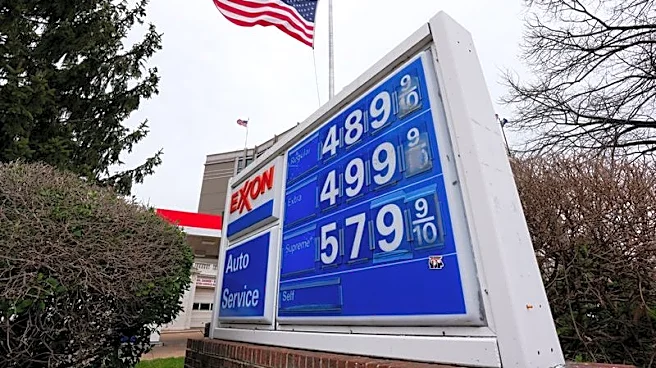
Florida residents have been paying significantly higher prices for gasoline and diesel due to the U.S.-Israeli conflict with Iran, which has disrupted global oil supply chains. The closure of the Strait of Hormuz has forced Florida to compete with Europe
and Asia for fuel produced in Texas and other U.S. states. Florida lacks refineries and pipelines, relying heavily on barges from the U.S. Gulf Coast for its fuel supply. As international markets prioritize exports, Florida has faced rare premiums on fuel prices, with gasoline and diesel costs rising above the national average. The situation has become a concern for President Trump and the Republican Party as they prepare for midterm elections.
Why It's Important?
The fuel supply vulnerability in Florida highlights the state's reliance on external sources for energy, making it susceptible to international conflicts and trade disruptions. The situation underscores the need for diversified energy strategies and infrastructure improvements to ensure stable supply chains. High fuel prices could impact consumer spending and economic growth in Florida, affecting industries reliant on transportation and logistics. The issue also has political implications, as fuel costs become a focal point in the upcoming elections, with potential repercussions for public opinion and policy decisions.
What's Next?
Florida may need to explore alternative energy sources and infrastructure improvements to mitigate future supply chain disruptions. Policymakers could consider investing in local refineries or pipeline projects to reduce dependency on external sources. The ongoing conflict in the Middle East may continue to affect global oil markets, prompting further adjustments in trade routes and pricing strategies. As the situation evolves, stakeholders will need to address the economic and political challenges associated with fuel supply vulnerabilities.
Beyond the Headlines
The fuel supply issue in Florida raises broader questions about energy security and sustainability in the U.S. The reliance on international markets for critical resources highlights the need for more resilient and self-sufficient energy strategies. The situation also underscores the importance of addressing climate change and transitioning to renewable energy sources to reduce dependency on fossil fuels and mitigate geopolitical risks.