







What's Happening?
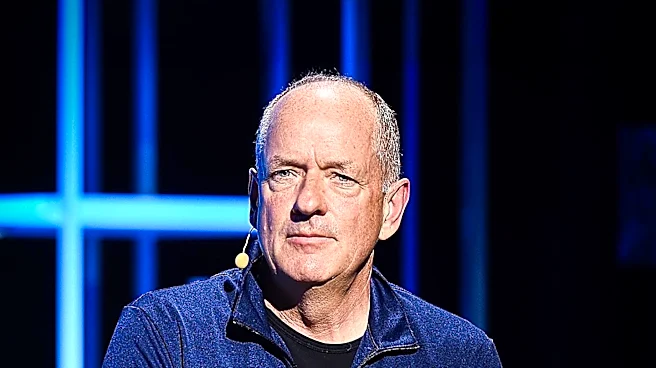
Chris Spear has departed from his role as President and CEO of the American Trucking Associations (ATA), effective immediately. The announcement was made in a letter to members from ATA chairman Greg Hodgen, CEO of Groendyke Transport. While the initial
communication did not specify if Spear resigned or was asked to leave, a subsequent statement from the ATA confirmed that Spear informed the Executive Committee of his departure. Spear had recently marked his 10-year anniversary with the organization and had an extended contract until 2029, which was signed in 2024. Hodgen emphasized that the ATA remains strong and focused on its mission, with its advocacy agenda intact. Spear's tenure saw significant policy victories, strengthened advocacy operations, and an elevated voice for the trucking industry in Washington D.C. He previously served as vice president of government affairs at Hyundai Motor Co. and held various positions in the federal government, including an earlier stint as senior vice president for legislative affairs at ATA.
Why It's Important?
The departure of Chris Spear from the American Trucking Associations marks a significant leadership change for a key industry advocacy group. The ATA plays a crucial role in shaping U.S. transportation policy, influencing regulations, and representing the interests of the trucking sector, which is vital to the nation's supply chain and economy. Spear's leadership was credited with securing policy victories and strengthening the industry's voice in Washington. His exit could lead to a period of transition and potential shifts in the ATA's strategic direction or advocacy priorities. The stability of the ATA's leadership is important for maintaining consistent representation for trucking companies, especially given ongoing challenges such as driver shortages, infrastructure needs, and evolving environmental regulations. The search for a new President and CEO will be closely watched by industry stakeholders, as the chosen leader will inherit the responsibility of navigating these complex issues and ensuring the continued influence of the trucking industry in national policy discussions.
What's Next?
Following Chris Spear's immediate departure, the American Trucking Associations has initiated a search to identify its next President and CEO. In the interim, ATA chairman Greg Hodgen has assured members that the organization remains strong, focused, and fully engaged in delivering results. The ATA's mission and advocacy agenda are stated to be unchanged, with existing teams continuing their work. The selection of a new leader will be a critical next step, as the individual will be tasked with maintaining the momentum and influence established during Spear's tenure. This transition period may involve internal restructuring or a re-evaluation of certain strategic initiatives, though the ATA has indicated a commitment to continuity. Stakeholders, including trucking companies, policymakers, and other industry associations, will be observing the search process and the eventual appointment to understand the future direction of the ATA's advocacy efforts and its impact on the U.S. transportation landscape.
Beyond the Headlines
The sudden departure of a long-serving and influential leader like Chris Spear from the American Trucking Associations can have deeper implications beyond immediate operational changes. It raises questions about internal dynamics within the organization, potential shifts in industry priorities, and the future of lobbying efforts in Washington D.C. for the trucking sector. The ATA's role extends to advocating for policies that affect everything from fuel efficiency standards and driver training to infrastructure funding and trade agreements, all of which have broad economic and societal impacts. A change in leadership could lead to a re-evaluation of these advocacy strategies, potentially influencing legislative outcomes that affect supply chain costs, consumer prices, and environmental regulations. Furthermore, the transition could impact the ATA's relationships with government agencies and other industry groups, potentially altering the landscape of transportation policy discussions in the U.S. The new leader will face the challenge of uniting diverse interests within the trucking industry while navigating a complex political environment.