
What's Happening?
Congresswoman Luz Rivas has publicly announced her support for impeachment proceedings against President Trump. Her decision is primarily driven by concerns over alleged abuses by Immigration and Customs
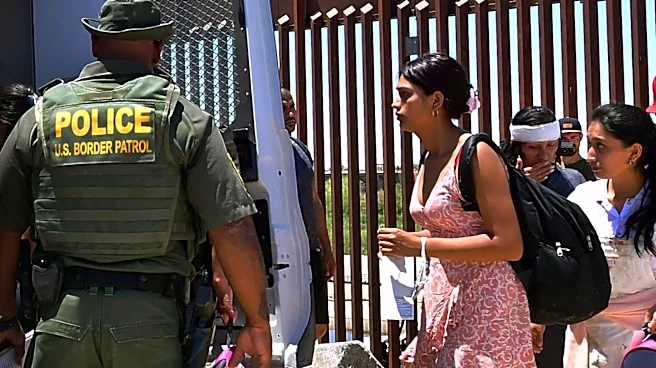
Enforcement (ICE) and a stated commitment to protecting immigrant communities. Rivas emphasized that President Trump should be held accountable for ICE's actions and what she described as 'this Administration’s abuses of power.' She specifically highlighted the need to safeguard immigrant communities in her district, which includes the San Fernando Valley, and criticized ICE for allegedly carrying out President Trump's agenda 'violently and unlawfully,' advocating for the agency's abolition. In terms of her financial disclosures, Rivas reported $79.2K in fundraising during Q2, filed on July 15th, 2026, with 33.7% originating from individual donors. Her spending for the same period amounted to $65.6K, and she concluded the filing period with $377.5K cash on hand. Quiver Quantitative estimates her net worth at $3.1M as of September 15th, 2026.
Why It's Important?
Congresswoman Rivas's public stance on impeachment proceedings against President Trump, particularly her focus on ICE abuses and immigrant community protection, underscores a significant point of contention within U.S. politics. This move highlights the ongoing debate surrounding immigration policy and the conduct of federal agencies like ICE. For immigrant communities, especially those in her district, this announcement signals a legislative advocate actively addressing their concerns and pushing for accountability. The call for ICE's abolition, while a more radical position, reflects a growing sentiment among some progressive lawmakers and advocacy groups regarding the agency's practices. Politically, such a declaration can galvanize support among her base and potentially influence the broader discourse on impeachment, even as it may draw criticism from opposing factions. Her financial disclosures, showing substantial fundraising and cash on hand, indicate a robust campaign infrastructure, suggesting she is well-positioned to continue advocating for her policy priorities and potentially face future electoral challenges.
What's Next?
Following Congresswoman Rivas's announcement, the focus will likely shift to the progression of impeachment proceedings in Congress. Her vote and public statement will contribute to the overall momentum, or lack thereof, for impeachment. Other lawmakers may be influenced by her stance, potentially leading to a broader coalition supporting or opposing such actions. Advocacy groups for immigrant rights and those critical of ICE will likely amplify her message, using it to further their own campaigns for policy reform or agency oversight. Conversely, supporters of President Trump and ICE will likely criticize her position, framing it as politically motivated or detrimental to national security. The debate surrounding ICE's future and its operational methods is expected to intensify, with potential legislative proposals for reform or restructuring. Rivas's financial standing suggests she is prepared for sustained political engagement, indicating that her advocacy on these issues will continue to be a prominent feature of her legislative agenda.
Beyond the Headlines
Congresswoman Rivas's emphasis on ICE abuses and immigrant community protection delves into deeper ethical and societal implications concerning human rights and governmental power. The debate over ICE's conduct touches upon fundamental questions about due process, the treatment of vulnerable populations, and the balance between national security and civil liberties. Her call for the agency's abolition, while a strong political statement, also reflects a growing philosophical divide on how the U.S. should manage immigration enforcement. This perspective challenges the traditional role of law enforcement agencies and raises questions about systemic issues within the immigration system. The long-term impact of such discussions could lead to significant shifts in public perception and policy regarding immigration, potentially influencing future legislative frameworks and the operational mandates of federal agencies. This ongoing dialogue highlights the evolving moral and legal considerations surrounding immigration in the United States.