





What's Happening?
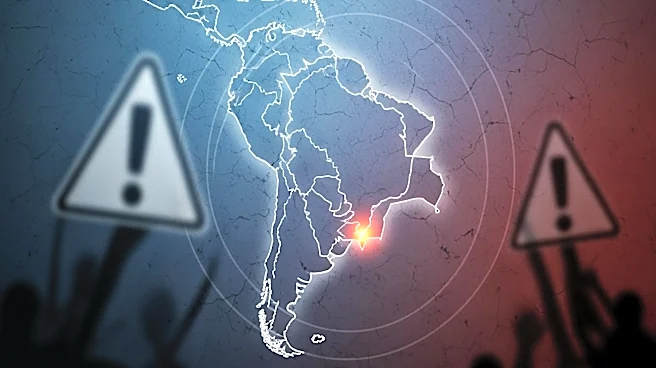
The U.S. State Department has updated its travel advisory for Bolivia, urging American tourists to exercise increased caution due to rising crime and unrest. The advisory, issued on April 28, highlights the prevalence of petty crime, particularly in popular
tourist areas, and warns against traveling to the Chapare Province. This region is noted for illegal coca production and associated violent crime linked to narco-trafficking. The advisory also mentions that U.S. government employees require special authorization to travel to Chapare, and the U.S. government has limited ability to provide emergency services there. The update comes as Bolivia joins a list of countries recently flagged by U.S. officials for security concerns, including Azerbaijan and Albania.
Why It's Important?
This travel advisory is significant as it impacts American tourists and expatriates in Bolivia, potentially affecting tourism and local economies reliant on foreign visitors. The warning underscores ongoing security challenges in Bolivia, particularly in regions like Chapare, which are affected by drug trafficking. For U.S. citizens, the advisory serves as a critical reminder to remain vigilant and prepared when traveling abroad. The broader implications include potential diplomatic strains and the need for enhanced security measures for U.S. interests in the region. Additionally, the advisory reflects a growing trend of heightened travel warnings for various global destinations due to security concerns.
What's Next?
Travelers to Bolivia are advised to stay informed about local conditions, avoid large crowds, and have contingency plans in place. The U.S. State Department may continue to monitor the situation and update advisories as necessary. For Bolivia, addressing the underlying issues of crime and unrest, particularly in areas like Chapare, could be crucial in improving safety and restoring confidence among international visitors. The Bolivian government may need to enhance law enforcement capabilities and engage in diplomatic efforts to address the concerns raised by the U.S. advisory.