








What's Happening?
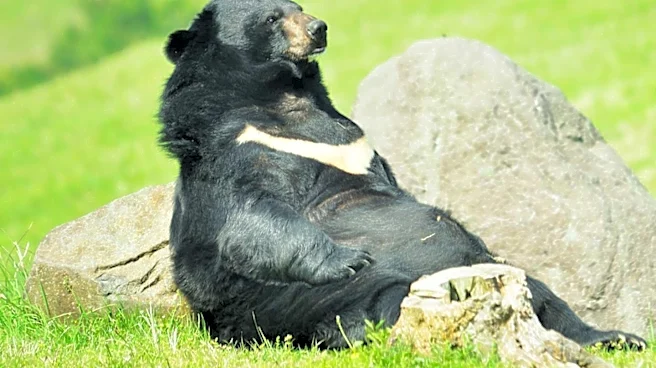
A study conducted in the Great Smoky Mountains National Park (GRSM) in Tennessee and North Carolina, a region with a high-density American black bear population and significant human visitation, has revealed that translocating bears involved in human-bear
conflicts is largely ineffective. Researchers equipped 50 conflict bears with GPS radio-collars and moved them to the Cherokee National Forest. The study found that the mean annual survival probability for translocated bears was significantly low at 0.223, compared to 0.869 for non-translocated bears remaining in GRSM. Harvest was identified as the primary mortality risk for translocated bears, with a probability of 0.482. Furthermore, the annual probability of translocated bears returning to their original capture locations was 0.615 for adults, and the annual probability of recurrent conflict was 0.388, increasing with the level of food conditioning.
Why It's Important?
This research has significant implications for wildlife management strategies in the U.S., particularly in national parks and areas with high human-wildlife interaction. The findings suggest that translocation, a common tool for conflict mitigation, is not a sustainable or effective long-term solution for managing human-bear conflicts. The high mortality rate of translocated bears, primarily due to harvest, raises ethical concerns about animal welfare and the efficacy of current management practices. The high rate of bears returning to their original locations and re-engaging in conflict indicates that the underlying issues, such as food conditioning, are not being addressed by relocation. This necessitates a re-evaluation of resource allocation and policy development for wildlife agencies, shifting focus towards preventative measures rather than reactive ones.
What's Next?
The study concludes that public education and improved waste management are paramount to preventing human-bear conflicts, as bear-centered options like translocation may not achieve desired outcomes. Moving forward, wildlife management agencies in areas like the Great Smoky Mountains National Park will likely need to prioritize community outreach programs to educate residents and visitors on safe practices around bears, including proper food storage and waste disposal. There may also be increased investment in infrastructure for bear-resistant waste containers and stricter enforcement of regulations regarding feeding wildlife. This shift in strategy aims to address the root causes of human-bear conflicts rather than relying on methods that prove detrimental to the bears and ineffective in resolving the issue.
Beyond the Headlines
The ineffectiveness of black bear translocation highlights a broader challenge in wildlife conservation: managing human-wildlife coexistence in increasingly urbanized and visited natural areas. This study underscores the complex interplay between human behavior, wildlife ecology, and policy. The high harvest rates of translocated bears suggest a disconnect between conservation efforts and hunting regulations or practices in adjacent areas. This raises questions about the need for more integrated land management policies that consider the movement and survival of wildlife across different jurisdictions. Ultimately, the findings call for a more holistic and preventative approach to wildlife management, emphasizing human responsibility and behavioral change as key components of successful coexistence.