
What's Happening?
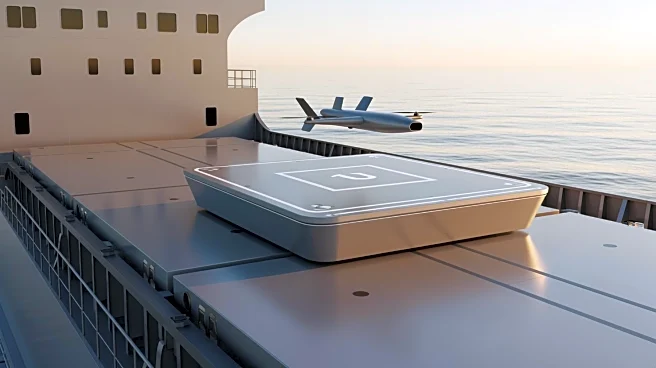
A Chinese container ship, Zhong Da 79, has been modified to include a truck-mounted catapult system for launching combat drones, as revealed by recent social media images. Initially equipped with 60 missile
launch tubes, the ship has now replaced most of these with the new drone launch system. This development is part of China's broader strategy to convert merchant vessels into naval assets, enhancing their ability to support air defense and surface warfare missions. The truck-mounted system, featuring electromagnetic launch rails, was installed on the ship in Shanghai, showcasing China's innovative approach to naval warfare. The adaptation of the Zhong Da 79 highlights China's ongoing efforts to integrate unmanned fighter aircraft into its naval operations, reflecting advancements in military technology and strategic planning.
Why It's Important?
The modification of the Zhong Da 79 underscores China's strategic focus on expanding its naval capabilities through innovative use of existing commercial vessels. By equipping container ships with drone launch systems, China can potentially increase its naval presence and operational flexibility without the need for traditional warships. This development could alter the balance of naval power in the region, prompting other nations to reassess their maritime strategies. The integration of drones into naval operations also reflects a broader trend towards unmanned systems in military applications, which could lead to significant changes in naval warfare tactics and doctrines. The ability to rapidly convert commercial vessels into military assets provides China with a cost-effective means to enhance its naval capabilities, potentially impacting global maritime security dynamics.
What's Next?
The introduction of drone launch capabilities on commercial vessels like the Zhong Da 79 may lead to further innovations in naval warfare, as other countries observe and potentially adopt similar strategies. This development could trigger an arms race in naval drone technology, with nations seeking to enhance their own capabilities in response to China's advancements. Additionally, the use of commercial ships for military purposes may raise legal and ethical questions regarding the militarization of civilian assets. As China continues to expand its naval capabilities, regional tensions could escalate, prompting diplomatic and military responses from neighboring countries and global powers. The international community may need to address the implications of such developments through dialogue and potential regulatory measures.