





What's Happening?
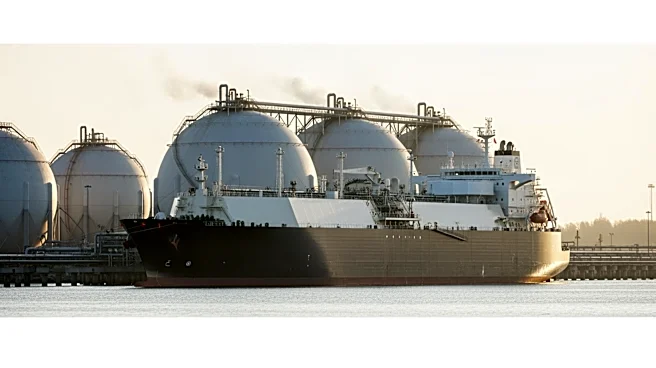
Russian energy company Gazprom has successfully delivered its second liquefied natural gas (LNG) cargo to China from the Portovaya plant in the Baltic Sea. This delivery comes despite the imposition of additional U.S. sanctions in January 2025, aimed
at disrupting Russia's LNG production and export capabilities due to the ongoing Ukraine conflict. The Portovaya plant, which began operations in September 2022, has a production capacity of 1.5 million tons of LNG annually. The recent shipment was transported by the gas carrier Valera, previously known as Velikiy Novgorod, and arrived at the Beihai LNG terminal. Prior to the sanctions, Portovaya regularly shipped two cargoes per month during the winter season to various countries, including Turkey and Greece, with its market later expanding to China, Spain, and Italy.
Why It's Important?
The delivery of LNG to China by Gazprom highlights the ongoing geopolitical tensions and the impact of U.S. sanctions on global energy markets. The sanctions are part of broader efforts to limit Russia's revenue from energy exports, which are crucial to its economy. Despite these restrictions, Russia continues to find markets for its LNG, particularly in China, which is a significant consumer of energy resources. This situation underscores the complex interplay between international sanctions and global energy supply chains, as well as the challenges in enforcing such measures. The ability of Russia to continue exporting LNG could influence global energy prices and availability, affecting both producers and consumers worldwide.
What's Next?
As the geopolitical landscape evolves, further developments in the energy sector are anticipated. The U.S. and its allies may consider additional measures to tighten sanctions or explore alternative energy sources to reduce dependency on Russian exports. Meanwhile, Russia is likely to continue seeking new markets and strengthening existing trade relationships to mitigate the impact of sanctions. The ongoing situation may prompt shifts in global energy alliances and strategies, with potential implications for energy security and economic stability in various regions.