






What's Happening?
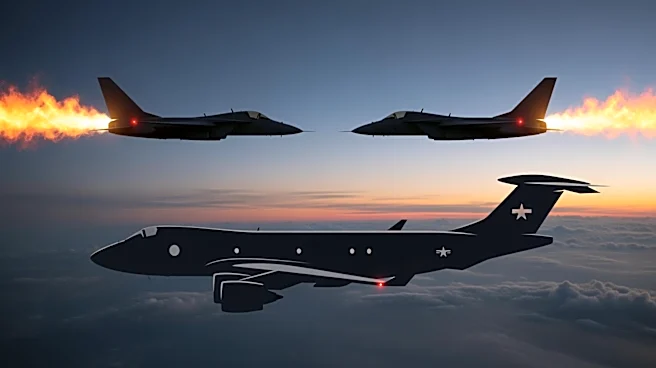
Between May 24 and 26, 2026, China conducted a significant military operation involving nearly 60 aircraft, including a Y-20 tanker, in Taiwan's Air Defense Identification Zone (ADIZ). The Taiwanese Ministry of National Defense reported that the Y-20 tanker was
intercepted by Taiwanese fighters while refueling J-16 fighters. This operation is part of a broader pattern of Chinese military activities in the region, which also included J-10 fighters and KJ-500 Airborne Early Warning and Control aircraft. The Taiwanese military responded by deploying Combat Air Patrol aircraft, Navy ships, and coastal missile systems. The incident underscores the ongoing military tensions between China and Taiwan, with potential implications for regional stability.
Why It's Important?
The interception of China's Y-20 tanker by Taiwanese fighters highlights the escalating military tensions in the Taiwan Strait, a critical geopolitical flashpoint. This development is significant as it underscores China's assertive military posture in the region, which could have broader implications for U.S. foreign policy and regional security dynamics. The U.S. has historically supported Taiwan, and increased Chinese military activities could prompt a stronger U.S. response, potentially involving increased military presence or diplomatic efforts to deter further escalation. The situation also raises concerns about the risk of miscalculation or accidental conflict, which could have severe consequences for global stability.
What's Next?
The ongoing military activities by China in Taiwan's ADIZ are likely to continue, with potential for further interceptions by Taiwanese forces. This could lead to increased diplomatic tensions between China and Taiwan, as well as between China and the U.S. The international community, particularly the U.S. and its allies, may need to consider strategic responses to deter further Chinese military assertiveness. Additionally, there may be calls for increased dialogue and confidence-building measures to prevent accidental conflicts and ensure regional stability.