

What's Happening?
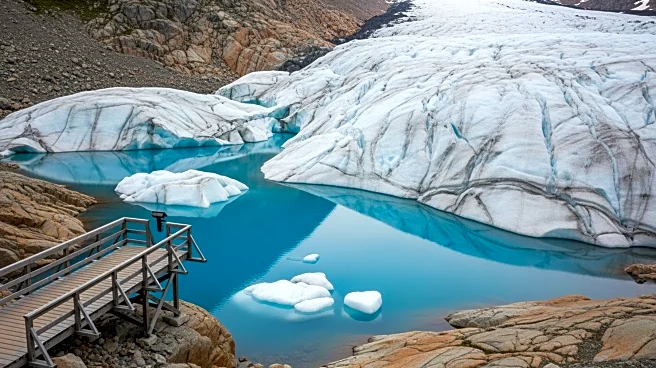
A study co-authored by Rice University anthropologist Cymene Howe, published in Nature Climate Change, explores the increasing attraction of melting glaciers as tourist destinations. These glaciers, now visited by over 14 million tourists annually, have
become symbols of climate change, drawing visitors who wish to witness these natural wonders before they vanish. The study highlights the dual role of glaciers as both fragile landscapes and economic engines, creating tensions between conservation efforts and tourism-driven economic benefits. The emotional impact on visitors, who often experience ecological grief, has led to new forms of engagement, such as educational centers and public ceremonies mourning lost glaciers. However, the study warns that tourism-driven adaptation strategies, like expanding infrastructure or increasing helicopter access, may exacerbate environmental degradation and economic inequality.
Why It's Important?
The phenomenon of 'last-chance tourism' underscores the urgent need for climate action. As glaciers continue to melt, they serve as tangible evidence of global warming, prompting both public awareness and policy discussions. The economic implications are significant, as tourism can provide financial benefits to local communities but also risks increasing carbon emissions and environmental harm. The study calls for more thoughtful management of glacier tourism, emphasizing the importance of centering local communities and addressing environmental justice concerns. This situation highlights the broader challenge of balancing economic interests with environmental sustainability in the face of climate change.
What's Next?
The study suggests that more research and policy development are needed to manage glacier tourism sustainably. This includes rethinking tourism models that rely on disappearing landscapes and ensuring that local communities benefit from tourism revenues. As glaciers continue to retreat, there is a pressing need for systemic changes that address the root causes of climate change rather than relying on short-term technical fixes. The study advocates for policies that prioritize environmental justice and community resilience, potentially influencing future climate action and tourism strategies.
Beyond the Headlines
The emotional and cultural significance of glaciers extends beyond their physical presence. They are not only natural wonders but also integral to the cultural heritage of communities that have lived near them for millennia. The loss of glaciers represents a profound cultural and environmental shift, prompting new rituals and forms of climate activism. This highlights the need for a deeper understanding of the cultural dimensions of climate change and the importance of preserving not just the physical environment but also the cultural landscapes tied to it.