






What's Happening?
Digital dentistry is transitioning from an emerging technology to a standard practice, with CU Anschutz Dental at the forefront of this transformation. Faculty experts David Gozalo, DDS, MS, and Jeffrey Stansbury, PhD, presented on how advancements in scanning,
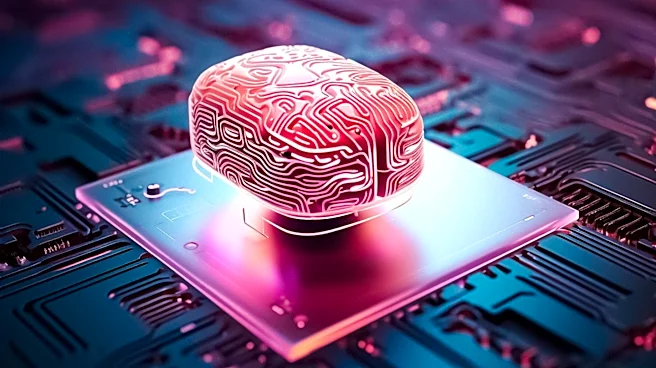
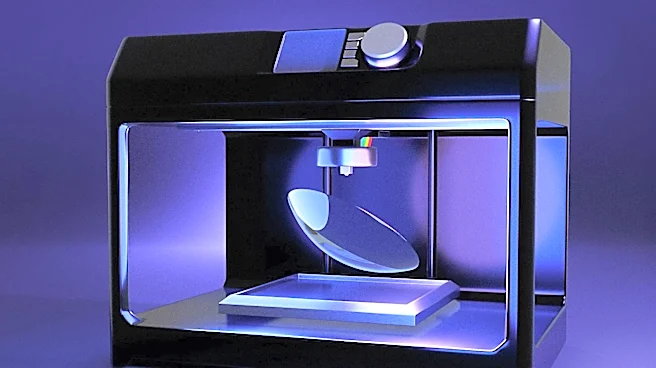
software, artificial intelligence (AI), and additive manufacturing are reshaping the dental profession. The shift involves moving towards fully integrated digital workflows that connect patient scans, treatment planning, design software, and production systems, making dentistry faster, more efficient, and more predictable. AI-assisted applications are increasingly supporting diagnostic interpretation, treatment planning, and restorative design, while cloud-based systems facilitate seamless collaboration between practices, specialists, and laboratories. Researchers are also focusing on the transition from traditional subtractive manufacturing to additive manufacturing technologies like 3D printing, exploring new materials and processes to produce complete and partial dentures, crowns, and other restorations.
Why It's Important?
The integration of digital technologies, AI, and 3D printing in dentistry represents a significant leap forward in patient care and professional practice. This shift promises to enhance diagnostic accuracy, streamline treatment processes, and improve the predictability and efficiency of dental procedures. For patients, this could mean more personalized treatments, reduced chair time, and potentially better long-term outcomes. For dental professionals, these advancements offer tools to work more effectively, collaborate seamlessly, and stay at the cutting edge of their field. CU Anschutz Dental's role in both implementing and researching these technologies is crucial for shaping the future of dental education and clinical practice, ensuring that the next generation of dentists is equipped with the skills to leverage these innovations. The move towards additive manufacturing also has implications for cost-effectiveness and customization in dental prosthetics.
What's Next?
The future of digital dentistry at CU Anschutz Dental and beyond will be shaped by three interconnected trends: wider adoption of digital workflows, increased use of AI-powered software, and continued advancements in additive manufacturing. Researchers at CU Anschutz Dental are actively exploring new approaches, such as inkjet-based multimaterial printing, to create monolithic prostheses with enhanced functional properties. Strategic partnerships are also being forged to accelerate the translation of research into clinical applications, aiming to bring new technologies to the dental marketplace. The ongoing evolution of hardware and software options is expected to further integrate 3D printing within the broader digital dentistry movement, leading to more deeply integrated digital technologies in every stage of patient care.
Beyond the Headlines
The digital transformation in dentistry, driven by AI and 3D printing, extends beyond mere technological upgrades; it signifies a paradigm shift in healthcare delivery. The ability to create longitudinal digital records of patients, supported by AI for diagnostic interpretation, moves dentistry towards a more proactive and preventive model of care. This raises broader questions about data privacy, the role of AI in clinical decision-making, and the need for continuous professional development to keep pace with rapid technological changes. The ethical implications of AI in diagnostics and treatment planning, as well as the accessibility of these advanced technologies to all patient populations, will be critical considerations as digital dentistry becomes more widespread. Ultimately, this evolution has the potential to redefine the patient-dentist relationship and the very structure of dental practice.