

What's Happening?
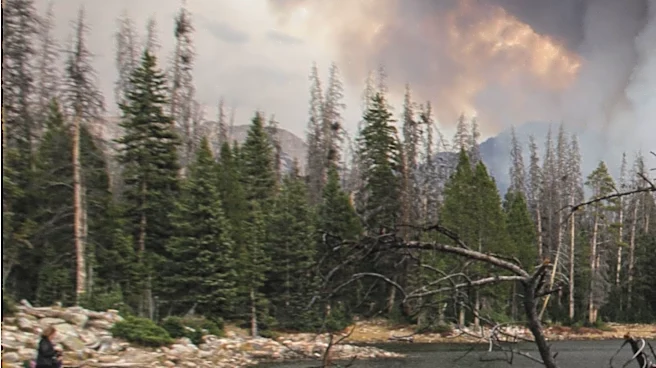
The U.S. Naval Research Laboratory (NRL) has completed the first field campaign of the Injected Smoke and PYRocumulonimbus Experiment (INSPYRE), a NASA-funded mission studying how intense wildfire-generated thunderstorms transport smoke into the upper
atmosphere. Led by David Peterson, Ph.D., an NRL research meteorologist, the campaign utilized two aircraft—NASA’s ER-2 and the NSF/NCAR Gulfstream V—to collect direct measurements of smoke plumes. During the three-month deployment, the team observed fires from Arizona to Canada and tracked transported smoke as far as Alaska. A notable achievement was intercepting a smoke plume from a Siberian wildfire that had traveled thousands of miles over the Arctic, across Alaska, and over the North Pacific. This allowed researchers to gather comprehensive data from multiple perspectives: near the source, inside the plume, and from space, addressing a critical gap in atmospheric forecasting regarding the altitude, travel path, and atmospheric effects of smoke plumes.
Why It's Important?
This research is vital for improving atmospheric models and forecasting capabilities in the U.S. and globally. Wildfire smoke, especially when injected into the upper atmosphere by pyrocumulonimbus (pyroCb) clouds, can travel vast distances and significantly impact air quality, visibility, and climate. For the U.S. Navy, understanding the altitude and particle properties of these plumes is crucial for operational decisions related to visibility, aviation, and optical systems, as smoke can degrade lasers, satellite communication, and targeting cameras. The data collected will help replace assumptions in current models with direct measurements, leading to more accurate predictions of smoke plume behavior and its effects on the atmosphere. This improved understanding can inform public health advisories, aviation safety protocols, and long-term climate research, benefiting a wide range of stakeholders from military operations to civilian populations affected by smoke-related health issues.
What's Next?
Following the completion of the field campaign, instrument teams are now processing and checking the collected data. Research groups will analyze fire behavior, cloud development, and transported smoke, with the aim of identifying which observations can improve existing atmospheric models and where current forecasts diverge from reality. The insights gained will be translated into practical tools for forecasters. A second deployment for the INSPYRE experiment is scheduled for 2027, indicating a continued commitment to this critical area of research. The long-term goal is to enhance scientific understanding of pyroconvection and wildfire smoke in the upper atmosphere, ultimately leading to more accurate predictions and better-informed operational decisions for various U.S. agencies and industries.
Beyond the Headlines
The INSPYRE campaign underscores the growing recognition of wildfires as a complex atmospheric phenomenon with far-reaching consequences beyond immediate fire zones. The ability of pyroCb clouds to inject smoke into the stratosphere, similar to volcanic eruptions, highlights a potential feedback loop with climate change, where increased wildfire activity could further influence atmospheric composition and global weather patterns. This research also exemplifies the importance of international collaboration in addressing global environmental challenges, as evidenced by tracking smoke from Siberia across continents. The advancements in remote sensing and airborne measurement technologies used in this campaign could pave the way for similar studies on other atmospheric pollutants, fostering a more holistic understanding of air quality dynamics and their impact on both human systems and natural environments.