







What's Happening?
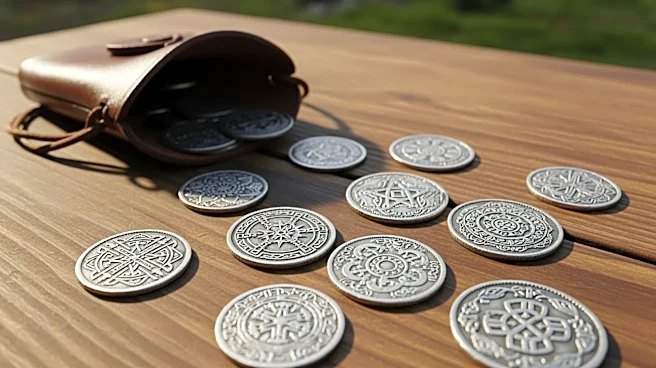
Two metal detector enthusiasts in Norway have uncovered a significant historical find: a hoard of 2,970 silver coins dating back to the Viking Age. The discovery was made in a field near Rena, approximately 45 miles from Oslo. The coins, which include
pieces from England, Germany, Denmark, and Norway, were minted under various rulers such as Cnut the Great and Harald Hardrada. This find, certified by the University of Oslo's Museum of Cultural History, is the largest of its kind in Norwegian history. The coins are believed to have been deposited around 1047, likely as revenue from iron trade activities in the region.
Why It's Important?
This discovery is significant as it provides insights into the economic and trade practices of the Viking Age, particularly in Norway. The coins reflect the extensive trade networks and the economic interactions between different regions during this period. For historians and archaeologists, such finds are invaluable for understanding the cultural and economic history of the Vikings. Additionally, the discovery underscores the importance of metal detecting as a tool for uncovering historical artifacts, which can lead to a greater understanding of past civilizations.
What's Next?
The coins will be transported to the Coin Cabinet at the Museum of Cultural History for cataloging and study. Further archaeological excavations are planned for the area to uncover more about the historical context of the find. Access to the site is currently restricted to protect its historical significance, and the coins will be studied to provide more detailed insights into the Viking Age economy and trade.