


What's Happening?
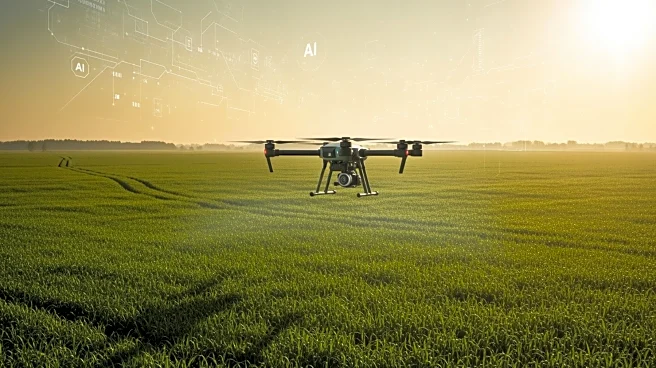
India has significantly advanced its agricultural monitoring capabilities through the Digital Agriculture Mission, which has created over 7.63 crore farmer IDs and surveyed 23.5 crore crop plots. This initiative is part of a broader effort to integrate
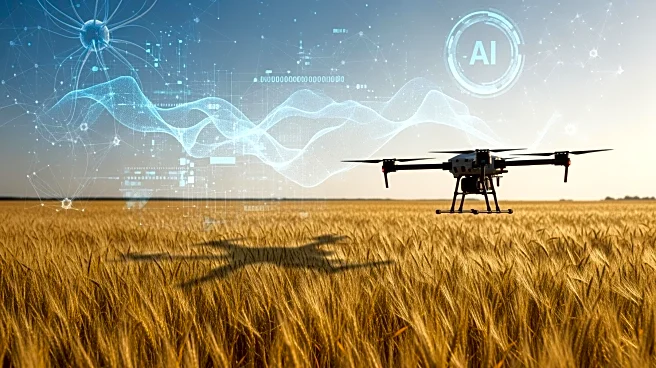
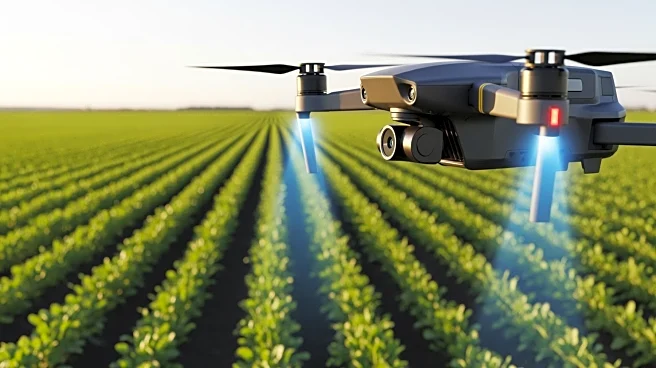
artificial intelligence (AI) into agriculture, providing real-time advisories for pest detection and crop management. The National Pest Surveillance System supports 66 crops and over 432 pest types, aiding more than 10,000 extension workers. Additionally, AI tools like the Kisan e-Mitra chatbot have handled millions of farmer queries, and a pilot project for monsoon forecasting has influenced farming decisions for millions of farmers. The Union Budget 2026-27 has proposed further AI integration through Bharat-VISTAAR, aiming to enhance agricultural services and crop insurance transparency.
Why It's Important?
The integration of AI into agriculture is crucial for enhancing productivity and sustainability in the sector. By providing real-time data and predictive analytics, these technologies help farmers make informed decisions, potentially increasing yields and reducing losses due to pests and weather conditions. The initiative also aims to streamline crop insurance processes, making them more accessible and transparent. This could lead to increased financial security for farmers, encouraging investment in agriculture. The broader adoption of AI in agriculture could serve as a model for other countries facing similar challenges, potentially transforming global food security and agricultural practices.
What's Next?
India plans to continue expanding its digital agriculture initiatives, with further integration of AI tools like Bharat-VISTAAR. This will likely involve more comprehensive data collection and analysis, enhancing the precision of agricultural advisories. The government may also focus on increasing farmer participation in these programs, ensuring that the benefits of AI reach a wider audience. As these technologies evolve, there could be increased collaboration with international partners to share knowledge and best practices, further advancing global agricultural innovation.
Beyond the Headlines
The use of AI in agriculture raises important ethical and privacy considerations, particularly regarding data collection and usage. Ensuring that farmers' data is protected and used responsibly will be crucial as these technologies become more widespread. Additionally, there is a need to address potential disparities in access to these technologies, ensuring that smallholder and marginalized farmers are not left behind. The long-term success of these initiatives will depend on balancing technological advancement with equitable access and ethical data practices.