



What's Happening?
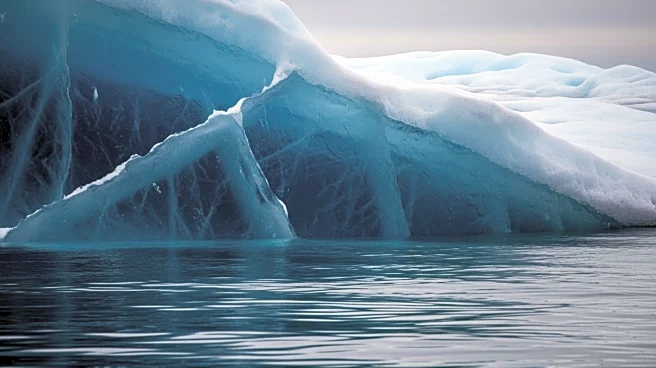
The Thwaites Glacier, often referred to as the 'Doomsday Glacier,' is experiencing accelerated retreat, raising alarms about its potential impact on global sea levels. According to a study by the International Thwaites Glacier Collaboration (ITGC), the glacier's
structural integrity is being compromised by large cracks forming in its ice shelf. These developments have been observed through satellite data from 2002 to 2022, which show the growth of fractures around a shear zone. The glacier's retreat has been significantly faster over the past 40 years, and if it collapses, it could contribute to a global sea level rise of up to 11 feet. This would have devastating effects on coastal communities worldwide. Researchers have also identified a feedback loop where cold water from the ice shelf mixes with warmer ocean waters, increasing turbulence and further melting the ice.
Why It's Important?
The accelerated retreat of the Thwaites Glacier poses a significant threat to global sea levels, with potential catastrophic consequences for coastal regions. If the glacier collapses, it could lead to a substantial rise in sea levels, endangering millions of people living in coastal areas. This situation underscores the urgent need for climate change mitigation efforts to slow down the glacier's retreat and prevent similar occurrences in other parts of Antarctica. The findings highlight the critical importance of addressing global warming to protect vulnerable communities and ecosystems from the impacts of rising sea levels.
What's Next?
The study suggests that immediate and sustained climate change mitigation, such as decarbonization, is essential to delay the ice loss from the Thwaites Glacier. Researchers are continuing to study the glacier to better understand the dynamics of its retreat and the potential impacts on global sea levels. The international scientific community is likely to increase efforts to monitor and model the glacier's behavior to inform policy decisions aimed at mitigating climate change and its effects on polar ice sheets.
Beyond the Headlines
The situation with the Thwaites Glacier highlights the broader implications of climate change on polar ice sheets and global sea levels. The feedback loop identified by researchers illustrates the complex interactions between ocean and ice dynamics, which could accelerate ice loss in a warming climate. This underscores the need for comprehensive climate policies that address both mitigation and adaptation strategies to protect vulnerable regions from the impacts of climate change.