







What's Happening?
World shares showed mixed results following losses on Wall Street, as U.S. stocks retreated from record highs. Oil prices initially rose due to escalating tensions between the U.S. and Iran but later retreated. The U.S. military reported sinking six Iranian
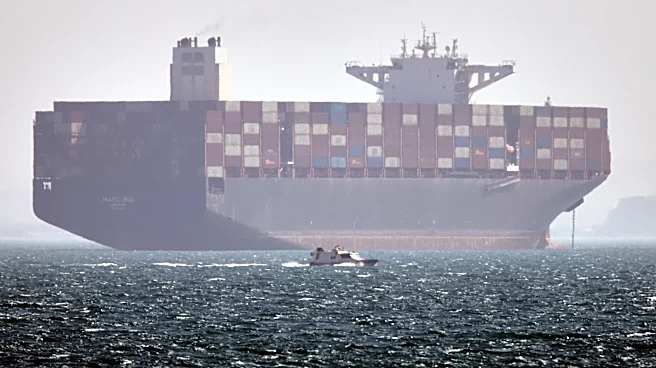
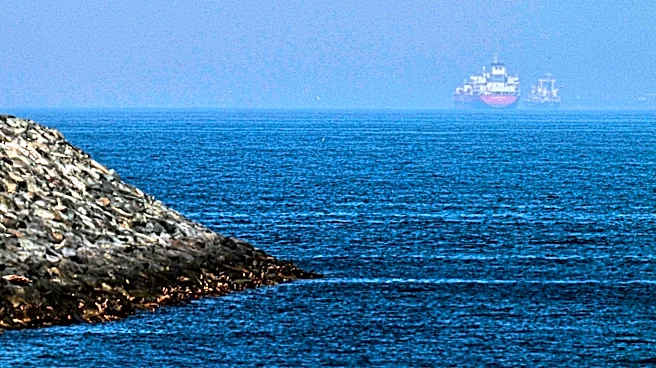
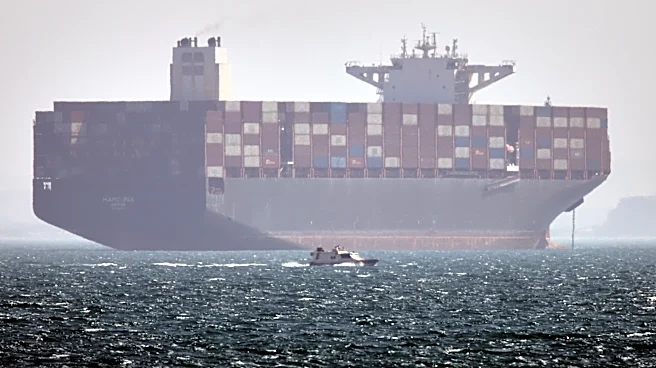
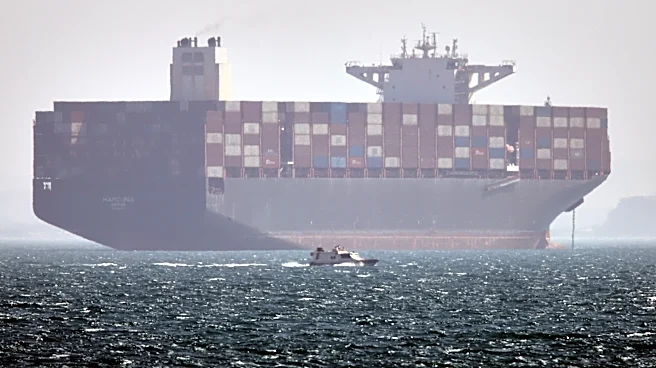
small boats targeting civilian ships, while two U.S.-flagged ships successfully passed through the Strait of Hormuz. Despite demands from the U.S. for Iran to reopen the strait, it remains largely closed, affecting oil and gas transport. The U.S. has imposed a sea blockade on Iranian ports, and President Trump's 'Project Freedom' aims to guide stranded ships through the strait.
Why It's Important?
The tensions between the U.S. and Iran have significant implications for global oil markets and geopolitical stability. The Strait of Hormuz is a critical chokepoint for oil and gas transport, and its closure can lead to supply disruptions and increased oil prices. This situation affects global markets, with potential impacts on inflation and economic growth. The U.S. and its allies are closely monitoring the situation, as further escalation could lead to broader geopolitical conflicts and economic repercussions.
What's Next?
Talks on a permanent end to the U.S.-Iran conflict have stalled, and tensions remain high. The continuation of 'Project Freedom' may lead to further escalation in the Persian Gulf. Stakeholders, including governments and businesses, are likely to seek diplomatic solutions to prevent further disruptions in oil supply and stabilize markets. The situation remains fluid, and developments in the region will be closely watched by global markets.