





What's Happening?
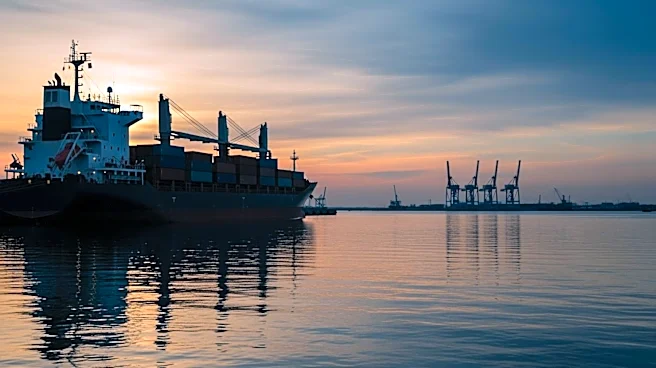
Ukrainian President Volodymyr Zelenskyy has accused Israel of violating international norms by purchasing grain from Ukrainian territories occupied by Russia. This accusation follows the docking of a Russian grain ship at Haifa Port, which Ukraine claims
carried wheat stolen from its occupied territories. The situation has escalated tensions between Kyiv and Jerusalem, with Ukraine preparing a sanctions package against those involved in the transport and sale of what it describes as 'stolen' grain. Ukrainian Foreign Minister Andrii Sybiha criticized Israel's handling of the issue, while Israeli Foreign Minister Gideon Sa’ar dismissed the claims, stating that diplomatic relations should not be conducted through media channels. Ukraine alleges that Russia has exported over 2 million tons of grain from occupied territories, valued at approximately $400 million, to various countries, including those in Africa, the Middle East, and Asia.
Why It's Important?
The dispute highlights the complex geopolitical dynamics involving Ukraine, Russia, and Israel, particularly in the context of the ongoing Russia-Ukraine conflict. The alleged sale of stolen Ukrainian grain not only affects Ukraine's economy but also raises ethical and legal questions about international trade practices during wartime. Israel's involvement, whether intentional or not, could strain its diplomatic relations with Ukraine and potentially other Western allies. The situation underscores the broader implications of the Russia-Ukraine war on global trade and international relations, as countries navigate the challenges of maintaining economic ties while adhering to international laws and sanctions.
What's Next?
Ukraine's preparation of a sanctions package suggests potential economic repercussions for entities involved in the trade of the disputed grain. Israel may face diplomatic pressure to address the allegations and ensure compliance with international trade laws. The situation could lead to increased scrutiny of trade practices involving goods from conflict zones, prompting countries to reassess their import policies. Additionally, the ongoing conflict between Russia and Ukraine may see further international involvement as countries like Israel are drawn into the economic and political ramifications of the war.