







What's Happening?
A new study published in Nature, co-authored by researchers from the University of Kansas, indicates that the Amazon rainforest has become a net source of global carbon emissions. Historically known as the 'lungs of the planet' for its ability to absorb
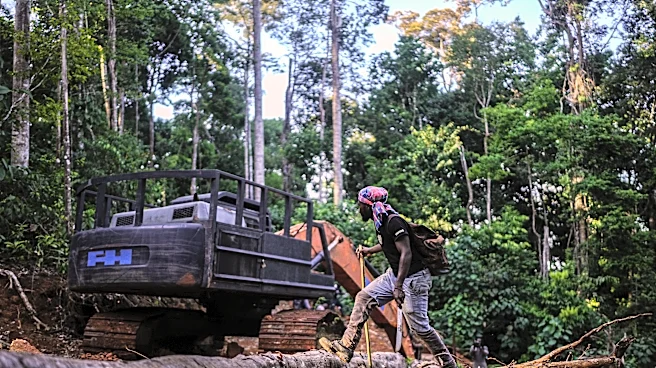
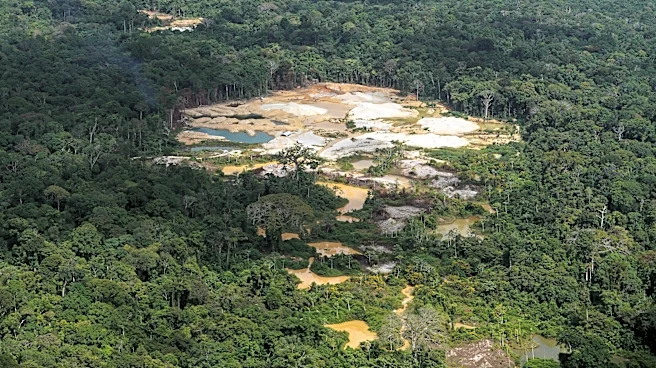
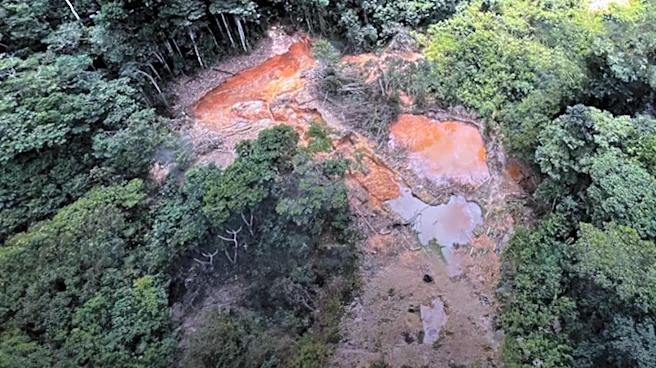
vast amounts of carbon dioxide, the rainforest is now releasing more carbon than it absorbs, particularly in hotter, drier years. The research, led by Brazil’s National Institute for Space Research, utilized 15 years of airborne measurements of atmospheric carbon. The study categorized years based on climatic stress and human activities like deforestation and wildfires. It found that even in relatively wet years with minimal human impact, the Amazon was a small net carbon source. However, net carbon emissions dramatically increased in years with high deforestation and wildfire activity, and were most severe when these human-driven factors coincided with extreme droughts and warm temperatures, as observed in 2024.
Why It's Important?
This shift in the Amazon's carbon balance has significant global implications for climate change. The rainforest's diminished capacity to absorb carbon means a critical natural buffer against human carbon emissions is weakening, potentially accelerating global warming. The study highlights that human activities, specifically land-use changes like deforestation and burning, are the dominant controls on the Amazon's net carbon balance, even more so than global climatic factors. This underscores the urgent need for policy interventions to reduce deforestation to zero. The findings challenge the long-held perception of the Amazon as a consistent carbon sink and suggest that a 'tipping point' where the forest transitions to a drier, less carbon-storing ecosystem could be approaching, posing a severe threat to the global climate system.
What's Next?
The findings provide a clear, policy-relevant prescription: measures to eliminate deforestation are essential to manage the Amazon's carbon budget. Policymakers and conservationists are urged to act decisively, as the opportunity to control Amazonia's carbon emissions is largely within human control. Failure to implement such measures would lead to a further reduction in the rainforest's ability to absorb carbon, with global consequences. Researchers plan to integrate additional measurements into the airborne monitoring program to better understand the components of carbon exchange and more accurately define the net carbon budget. This ongoing research aims to provide more precise data to inform future conservation strategies and policy decisions.
Beyond the Headlines
The study's emphasis on human-driven land-use changes as the primary factor influencing the Amazon's carbon balance brings to light the ethical and societal responsibilities associated with environmental stewardship. It suggests that the choices made by governments and individuals regarding land use in the Amazon region have profound global impacts, extending beyond local ecosystems to affect the entire planet's climate system. The concept of a 'tipping point' for the Amazon, where gradual drying and forest loss become self-reinforcing, raises concerns about irreversible ecological shifts. This situation also highlights the complex interplay between economic development, environmental protection, and the rights and practices of local communities, particularly Indigenous populations whose traditional land management practices could offer sustainable alternatives.