



What's Happening?
Switzerland has formally reopened its diplomatic office in North Korea, marking the first visit by a Swiss foreign minister, Ignazio Cassis, to the country since 2003. Cassis visited Pyongyang on October 29 and 30 before traveling to Seoul. The Swiss foreign ministry
stated that the trip aimed to restore direct political dialogue with North Korea and maintain contact with both sides of the divided Korean Peninsula. The diplomatic office, which falls under the Swiss embassy in Beijing, resumed operations on October 19. Switzerland's previous office in Pyongyang, focused on humanitarian cooperation, closed in 2020 due to the COVID-19 pandemic. During his visit, Cassis met with North Korean Foreign Minister Choe Son Hui and Jo Yong Won, secretary of the ruling Workers’ Party’s Central Committee, discussing the restoration of political dialogue, security on the Korean Peninsula, and broader security challenges.
Why It's Important?
This diplomatic engagement by Switzerland is significant as it represents a rare direct channel of communication with North Korea amidst heightened international tensions. The reopening of a diplomatic office and a high-level visit could potentially facilitate humanitarian efforts and provide a neutral platform for dialogue, which is crucial given North Korea's isolation. For the U.S. and its allies, who often struggle to establish direct communication with Pyongyang, Switzerland's role as a neutral intermediary could be valuable in de-escalating tensions and exploring diplomatic solutions. The discussions on security on the Korean Peninsula and wider regional challenges underscore the global implications of North Korea's actions. This move could also influence other neutral nations to consider similar diplomatic overtures, potentially broadening the scope of international engagement with North Korea beyond punitive measures.
What's Next?
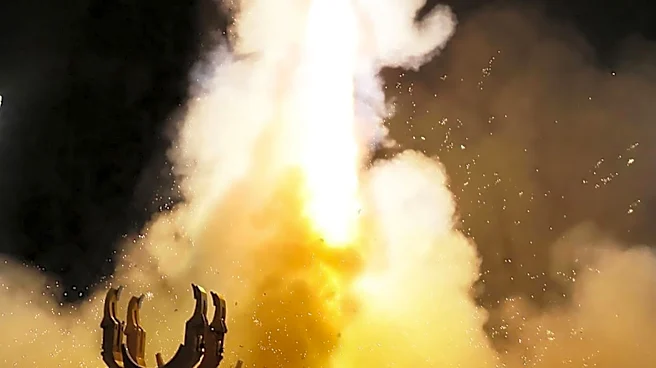
Switzerland will continue to use its reopened diplomatic office to engage directly with North Korean authorities and monitor developments in the region. Foreign Minister Cassis has offered Switzerland's assistance in facilitating dialogue to ease tensions on the peninsula, a proposal that was reportedly well-received. South Korea has expressed hope that the Swiss office will aid its efforts to engage with the North. The visit comes amid renewed military tensions, including North Korea's recent firing of short-range ballistic missiles. The success of Switzerland's diplomatic efforts will depend on North Korea's willingness to engage constructively and the broader geopolitical climate. This initiative could serve as a test case for whether neutral diplomacy can effectively bridge divides with highly isolated states.
Beyond the Headlines
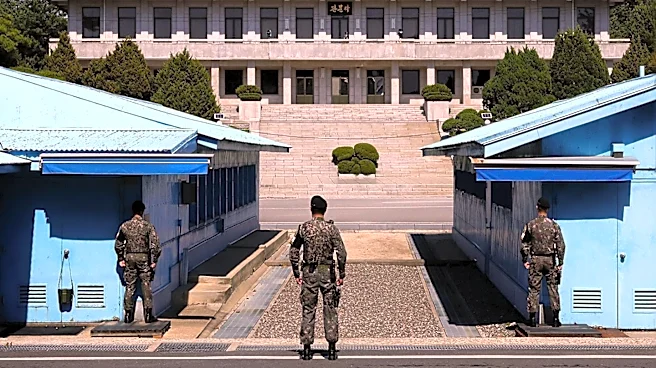
Switzerland's re-engagement with North Korea highlights the enduring value of neutral diplomacy in complex international relations. In an era often characterized by confrontational approaches, the Swiss initiative underscores the potential for quiet diplomacy to maintain communication lines and explore avenues for de-escalation. This move could also be seen as a subtle challenge to the prevailing strategy of 'maximum pressure' on North Korea, suggesting that alternative or complementary approaches might be necessary. The historical role of Switzerland in monitoring the Korean War armistice further solidifies its unique position. This diplomatic re-opening could also serve as a model for how other non-aligned nations might contribute to resolving intractable global conflicts, emphasizing dialogue and humanitarian concerns over purely punitive measures.