



What's Happening?
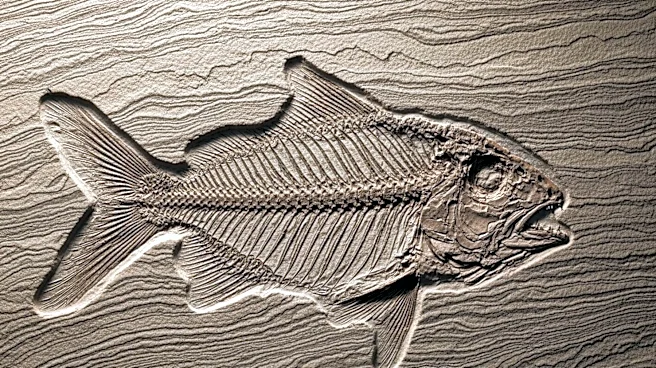
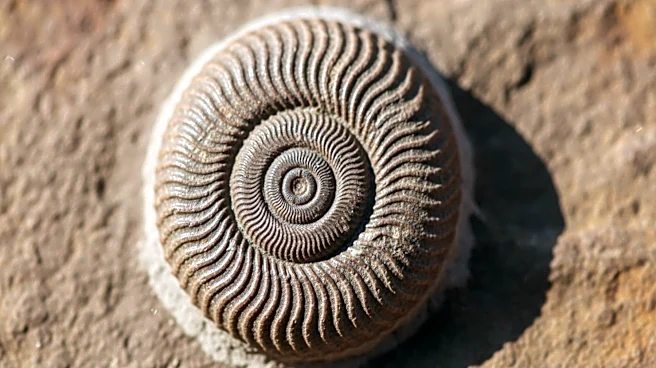
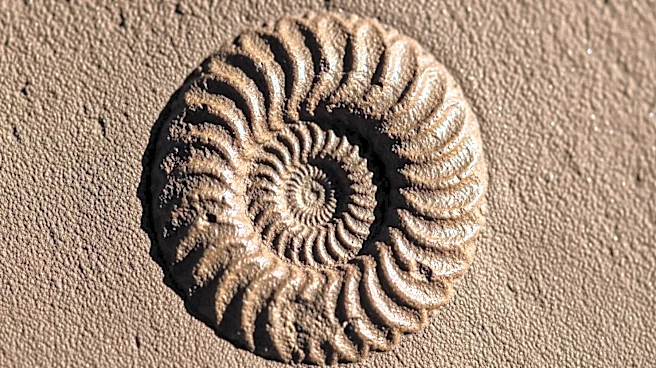
A fossil previously identified as the world's oldest octopus, Pohlsepia mazonensis, has been reclassified as a relative of the nautilus. Found in the Mazon Creek fossil beds in Illinois, the 300-million-year-old fossil was initially thought to be an octopus due
to its appearance. However, recent studies revealed it has more teeth than typical octopuses, aligning it closer to nautiloids. This discovery challenges previous assumptions and highlights the complexity of fossil interpretation. The fossil is now considered the oldest soft-tissue nautilus, providing new insights into cephalopod evolution.
Why It's Important?
The reclassification of Pohlsepia mazonensis as a nautilus relative rather than an octopus has significant implications for paleontology and our understanding of cephalopod evolution. It highlights the challenges in accurately interpreting fossil records, especially when dealing with soft-tissue specimens. This discovery may prompt reevaluation of other fossils, potentially altering scientific narratives about marine life evolution. It also emphasizes the importance of advanced technologies, like synchrotron imaging, in uncovering detailed fossil characteristics, aiding in more accurate classifications.