






What's Happening?
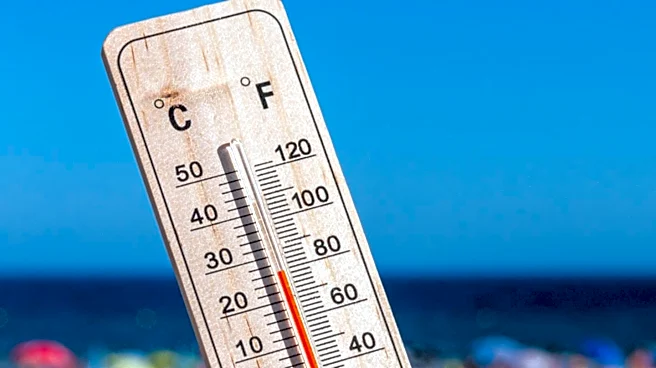
Dublin has experienced its hottest June on record, as reported by Met Éireann. The climate statement highlights that thirteen weather stations across Ireland broke their June maximum temperature records, with six stations setting new all-time highs. The highest
temperature recorded was 32.2°C in Athenry on June 25. Other notable records include Mace Head, Co Galway at 30.5°C, and Claremorris, Co Mayo at 31.3°C. Dublin's Casement Aerodrome recorded the second-highest minimum temperature ever at 20.3°C, while the Phoenix Park saw the highest mean monthly temperature of 16.2°C. The month was also marked by above-average rainfall, making it the eleventh wettest June on record, and sunnier conditions with fewer dull days. This heatwave is part of a broader European trend, with the World Weather Attribution group noting it as the most severe heatwave recorded in Europe, exacerbated by climate change.
Why It's Important?
The record-breaking temperatures in Dublin and across Europe underscore the growing impact of climate change on weather patterns. Such extreme heat events pose significant risks to public health, infrastructure, and ecosystems. The heatwave has already resulted in over 1,300 excess deaths in Europe, highlighting the urgent need for adaptive measures to protect vulnerable populations. The increased frequency and intensity of heatwaves could strain public health systems and necessitate changes in urban planning and energy consumption. This situation also emphasizes the importance of international cooperation in climate finance and policy to mitigate the effects of climate change and support sustainable development.
What's Next?
As climate change continues to influence weather patterns, it is likely that similar extreme weather events will become more frequent. Policymakers may need to prioritize climate adaptation strategies, including enhancing heatwave preparedness and resilience in urban areas. This could involve investing in green infrastructure, improving building standards for heat resistance, and expanding public awareness campaigns on heat safety. Additionally, international collaboration on climate finance could play a crucial role in supporting countries to implement these measures effectively. The ongoing dialogue at global climate summits will be critical in shaping future policies and commitments to address these challenges.
Beyond the Headlines
The recent heatwave in Dublin and Europe highlights the ethical and social dimensions of climate change. Vulnerable communities, particularly those with limited access to cooling resources, are disproportionately affected by extreme heat. This raises questions about equity and justice in climate adaptation efforts. Furthermore, the economic implications of such weather events are significant, potentially affecting agriculture, tourism, and energy sectors. Long-term shifts in climate patterns may also influence migration trends, as regions become less habitable. Addressing these complex issues requires a holistic approach that integrates environmental, social, and economic considerations.