



What's Happening?
At the World Economic Forum in Davos, U.S. allies expressed concerns about the stability of the international order following a series of statements by President Trump. These statements, which included threats of tariffs and military action regarding
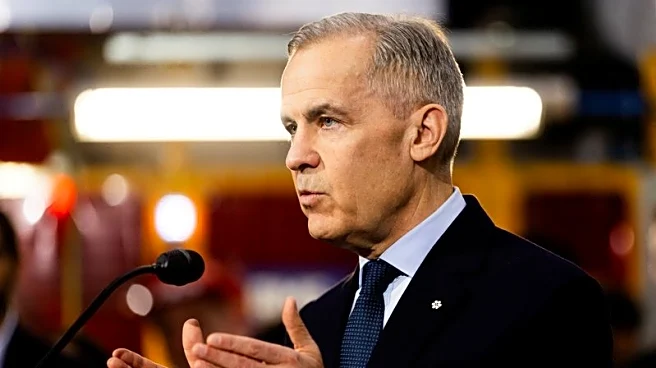
Greenland, have unsettled global markets and strained relations with U.S. allies. Canadian Prime Minister Mark Carney and French President Emmanuel Macron voiced concerns about the fading rules-based international order and the use of economic integration as a weapon. President Trump, however, emphasized the importance of military and economic power in maintaining security partnerships.
Why It's Important?
The concerns raised at Davos highlight the growing uncertainty among U.S. allies about America's role as a global leader. President Trump's remarks have led to diplomatic tensions and market volatility, raising questions about the durability of U.S. commitments to its allies. This situation underscores the potential for a shift in global leadership dynamics, with allies needing to navigate a more unpredictable international environment. The discussions at Davos reflect broader geopolitical challenges and the need for countries to reassess their strategic alliances and economic partnerships.
What's Next?
The ongoing diplomatic tensions may lead to further discussions among U.S. allies about how to address the challenges posed by the current U.S. administration's approach to international relations. Countries may seek to strengthen their own alliances and explore new partnerships to mitigate the impact of U.S. policy shifts. The situation also calls for a reevaluation of global economic and security frameworks to ensure stability and cooperation in the face of changing geopolitical dynamics.