









What's Happening?
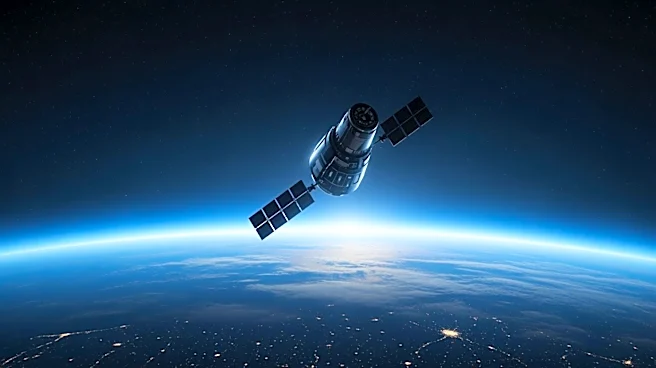
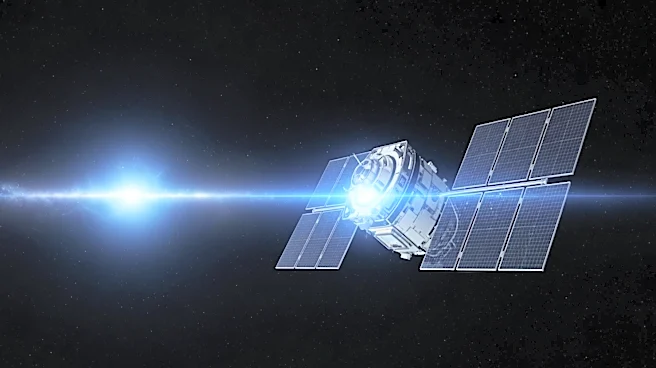
NASA is set to launch the Katalyst mission, which aims to boost the orbit of the Neil Gehrels Swift Observatory. The mission involves the LINK robotic servicing spacecraft, which will attempt to rendezvous with Swift and raise its altitude, thereby extending
its operational lifespan. This mission is a collaboration between NASA and Katalyst Space, with the LINK spacecraft launching on a Northrop Grumman Pegasus XL rocket. The Swift Observatory, launched in 2004, plays a crucial role in studying high-energy cosmic events like gamma-ray bursts. The mission is scheduled for launch from Kwajalein Atoll in the Marshall Islands.
Why It's Important?
The Katalyst mission is pivotal for demonstrating the capability of robotic servicing in space, which could revolutionize how aging satellites and observatories are maintained. By extending the Swift Observatory's lifespan, NASA can continue to gather valuable data on cosmic phenomena, enhancing our understanding of the universe. This mission also showcases the potential for public-private partnerships in advancing space technology, as Katalyst Space plays a key role in the mission. The success of this mission could pave the way for future servicing missions, ensuring the longevity and efficiency of space assets.
What's Next?
Following the launch, the LINK spacecraft will attempt to dock with the Swift Observatory and perform the orbital boost. If successful, this mission could lead to more frequent use of robotic servicing in space, potentially reducing the need for costly replacements of aging satellites. The mission's outcome will be closely monitored by NASA and the broader space community, as it could influence future strategies for satellite maintenance and space exploration.