




What's Happening?
Democrats in Maine are accusing Republican Senator Susan Collins of corruption after a ProPublica report suggested she directed federal funds to a contractor who significantly contributed to her 2020 reelection campaign. The report details allegations
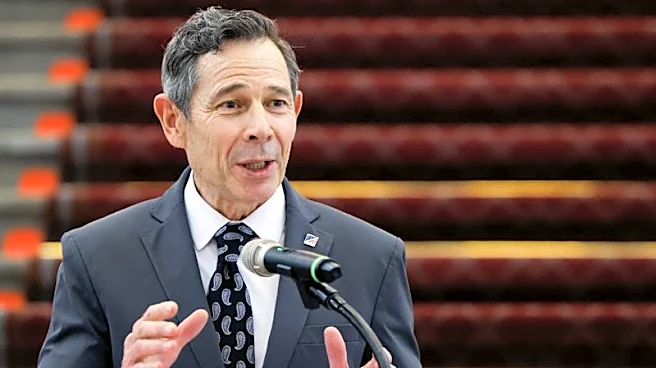
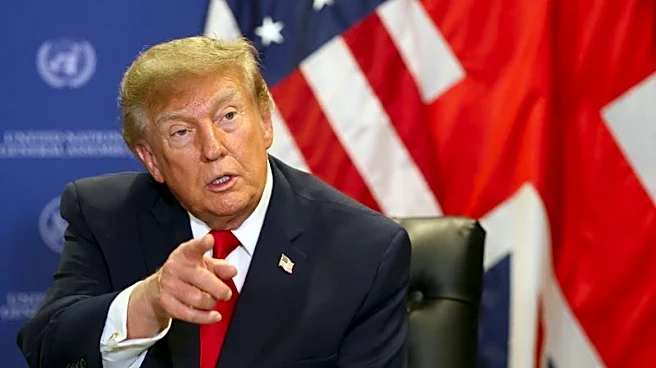
from Martin Kao, former CEO of Navatek, a Hawaiian defense contractor, who is currently serving a prison sentence for money laundering, bank fraud, and defrauding the federal government. Kao pleaded guilty in 2022 to illegally funneling over $150,000 to a super PAC supporting Collins through a shell company. ProPublica's investigation, based on Kao's statements to federal investigators and internal company emails, claims that Collins' office steered millions in government contracts to Navatek while her campaign sought donations from Kao and his network. Collins, who was the top-ranking Republican on the Senate Appropriations Committee at the time and now chairs it, allegedly used her influence to secure these contracts. Her Democratic opponent, Troy Jackson, has publicly criticized her, stating that Collins delivered taxpayer dollars to a 'corrupt donor' and that President Trump helped cover it up. Collins' Deputy Chief of Staff, Annie Clark, has vehemently denied these allegations, asserting that the claims are 'categorically false' and that the Collins campaign fully cooperated with FBI and Department of Justice investigations, which found no wrongdoing.
Why It's Important?
This accusation of a 'pay-to-play' scheme against Senator Susan Collins carries significant implications for U.S. politics, particularly regarding campaign finance ethics and the integrity of federal contracting processes. As a prominent Republican senator and chair of the Senate Appropriations Committee, Collins' alleged actions, if proven, could erode public trust in elected officials and the fairness of government spending. The report highlights concerns about how political donations might influence the allocation of taxpayer money, potentially creating an uneven playing field for businesses and undermining the competitive bidding process for federal contracts. The involvement of a major campaign donor, Martin Kao, who has already been convicted for illegal campaign finance activities, adds a layer of scrutiny to the relationship between political contributions and legislative influence. Furthermore, the claim that a broader FBI bribery probe was abandoned after President Trump's return to office raises questions about political interference in federal investigations and the accountability of high-ranking officials. This situation could impact the upcoming 2026 midterm elections, especially in Maine, where Collins is seeking a sixth term in a tightly contested race that could determine control of the Senate. The allegations could sway independent and moderate voters who value transparency and ethical governance.
What's Next?
The immediate aftermath of the ProPublica report will likely see continued political fallout and increased scrutiny on Senator Collins as she campaigns for reelection. Her Democratic opponent, Troy Jackson, is expected to leverage these allegations to challenge her integrity and influence voters in the tight Senate race. The Maine Democratic Party has already scheduled a news conference to address the 'bombshell' story, indicating a concerted effort to keep the issue in the public eye. Collins' campaign will continue to refute the claims, emphasizing the FBI's official statement that no evidence implicated her or her staff in wrongdoing. The report's impact on public opinion and voter sentiment in Maine will be closely watched, especially given Collins' history of bipartisan appeal and her ability to secure federal funding for the state. Political analysts suggest the report 'could sting' her reelection chances, potentially playing into Jackson's anti-corruption platform. The race is considered a toss-up, and the allegations could be a critical factor in determining which party controls the Senate. Debates between Collins and Jackson are scheduled, with the first potentially on October 6, where these allegations are almost certain to be a central topic.
Beyond the Headlines
The ProPublica report and the subsequent accusations against Senator Susan Collins delve into deeper implications concerning the ethical boundaries of political fundraising and the potential for influence peddling in Washington. Beyond the immediate political ramifications, this case highlights the persistent challenge of distinguishing legitimate political engagement from illicit 'pay-to-play' schemes. The narrative of Martin Kao, a convicted felon, claiming to have orchestrated a system where donations secured government contracts, underscores the vulnerability of the federal contracting process to manipulation. The alleged abandonment of a broader FBI investigation under the Trump administration, coupled with claims of a 'purge' of agents involved in politically sensitive cases, raises profound questions about the independence of federal law enforcement and the rule of law. This situation could fuel public cynicism regarding the fairness of the political system and the accountability of powerful figures. It also brings to light the opaque nature of super PAC funding and the difficulties in tracing the true sources of political contributions, which can obscure potential conflicts of interest. The long-term impact could be a renewed push for campaign finance reform and stricter oversight of federal contracts to prevent similar alleged abuses of power.