







What's Happening?
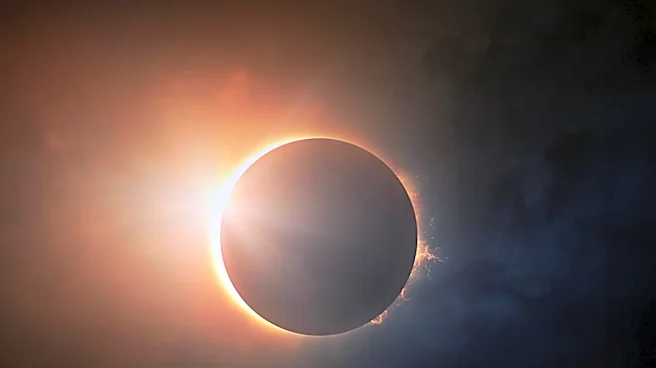
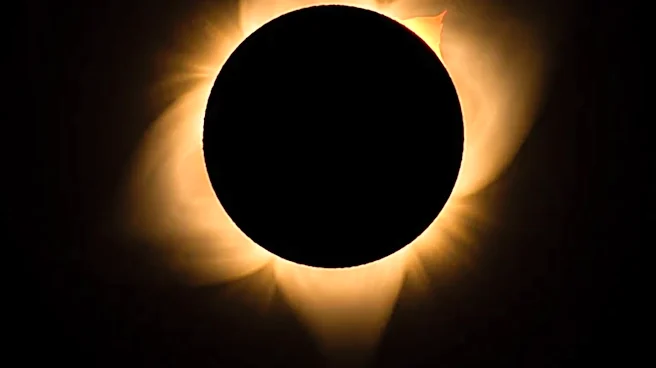
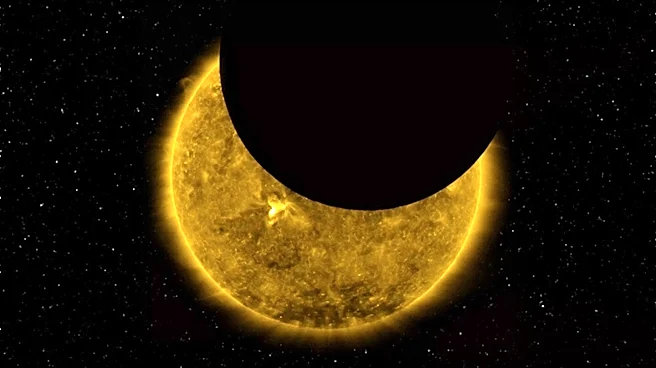
On August 12, 2026, a solar eclipse will occur, partially visible in various regions across North America. In the northeastern United States, areas such as Presque Isle in Maine will experience a maximum eclipse coverage of 28%, while New York City will see
about 10% coverage. The eclipse will be visible between approximately 1:00 PM and 2:30 PM EDT. This event is part of a larger eclipse path that will also affect parts of Canada and Europe, with varying degrees of visibility. In Canada, St. John's in Newfoundland will see the highest coverage at 53%. The eclipse is expected to be a significant astronomical event, drawing interest from both amateur and professional astronomers.
Why It's Important?
The solar eclipse of August 2026 is significant as it provides a rare opportunity for millions of people in North America to witness a celestial event that underscores the dynamics of our solar system. For the northeastern U.S., this partial eclipse offers educational opportunities and a chance to engage the public in science and astronomy. It also has potential economic impacts, as such events often boost local tourism and related industries, with people traveling to optimal viewing locations. The eclipse serves as a reminder of the importance of scientific literacy and the role of astronomy in understanding our universe.
What's Next?
As the date of the eclipse approaches, preparations will likely increase, including public viewing events organized by local observatories and science centers. Educational institutions may also plan activities to engage students and the community. Safety campaigns will be crucial to inform the public about proper viewing techniques to prevent eye damage. Additionally, weather conditions will play a significant role in visibility, and forecasts will be closely monitored. The event may also prompt discussions on future astronomical events and their potential impacts on society.