



What's Happening?
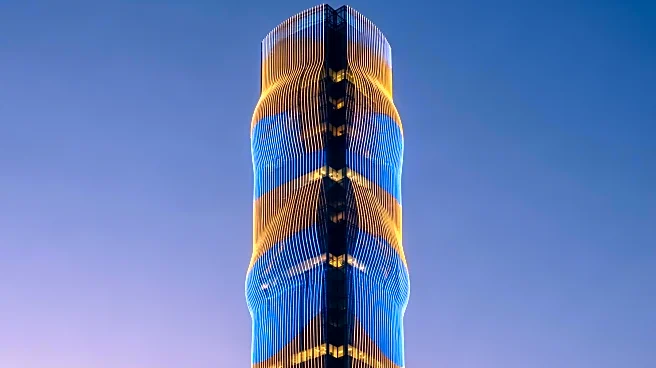
Leo Villareal, an artist known for his large-scale light installations, has created a new artwork titled 'Celestial Passage' for the JPMorgan Chase tower at 270 Park Avenue in New York City. This installation features 181,200 small groups of LEDs, each
acting as an individually controllable pixel, creating dynamic patterns on the building's surface. The artwork spans the top two setback sections of the 60-story building, extending approximately 750 feet down from the crown to the 29th floor. Villareal, who has been testing and adjusting the installation, uses custom-built software to control the lights in real-time, allowing for a variety of visual effects that include diffraction, interference, and meteor shower-like sequences. The installation is designed to be both visually striking and subtle, with the LEDs running at a quarter of their maximum brightness to create a warm, inviting glow.
Why It's Important?
The installation at the JPMorgan Chase tower represents a significant intersection of art and architecture, enhancing the urban landscape of New York City. Villareal's work not only adds aesthetic value but also demonstrates the potential of integrating technology with public spaces to create engaging experiences. This project highlights the role of art in corporate environments, potentially influencing future architectural designs and urban planning. By opting for a more subdued lighting approach, Villareal's installation challenges the trend of overly bright urban lighting, promoting a more harmonious integration with the city's skyline. This could set a precedent for future developments, encouraging a balance between visibility and visual comfort in urban lighting design.
What's Next?
Villareal will continue to refine the installation, ensuring that it remains a dynamic and evolving piece of art. JPMorgan Chase plans to use the building's lighting for special events and holidays, incorporating vibrant displays such as national flags and themed visuals. This dual use of the installation for both artistic and celebratory purposes may inspire other corporations to consider similar projects, blending art with functional lighting. As the installation becomes a fixture in the New York City skyline, it may attract attention from both locals and tourists, potentially influencing public perception of corporate art initiatives.
Beyond the Headlines
Villareal's work raises questions about the role of art in public and corporate spaces, particularly in terms of accessibility and engagement. By transforming a corporate building into a canvas for art, the installation challenges traditional notions of where art belongs and who it is for. This democratization of art, making it visible and accessible to the public, could inspire similar initiatives in other cities, fostering a greater appreciation for art in everyday environments. Additionally, the use of energy-efficient LED technology aligns with broader sustainability goals, highlighting the potential for art to contribute to environmental consciousness.