
What's Happening?
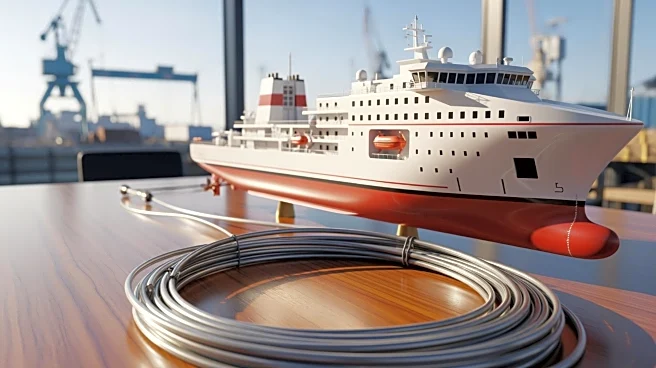
Mitsui O.S.K. Lines (MOL) has received an approval in principle (AiP) from ClassNK for the basic design of vessels intended for jointing and burying subsea power cables. This development is part of a collaborative
project with Sumitomo Electric Industries, Furukawa Electric, and Nippon Yusen Kabushiki Kaisha (NYK Line), supported by Japan's New Energy and Industrial Technology Development Organization (NEDO). The project aims to advance technologies for cable-laying vessels, which are crucial for the installation and protection of subsea power cables. These vessels, known as jointing and burial vessels, are essential for ensuring the integrity of power transmission lines, particularly in offshore wind power generation. The vessels will utilize remotely operated vehicles (ROVs) to perform cable jointing and burial tasks, safeguarding the cables from potential damage by anchors and fishing nets.
Why It's Important?
The approval of MOL's vessel design marks a significant step in enhancing the infrastructure needed for efficient power transmission from offshore wind farms. As the demand for renewable energy sources grows, the ability to transmit electricity over long distances from generation sites to consumption centers becomes increasingly critical. The development of these specialized vessels supports the expansion of offshore wind power, which is a key component of global efforts to transition to sustainable energy. This project not only strengthens Japan's capabilities in renewable energy but also sets a precedent for similar initiatives worldwide, potentially influencing U.S. energy policies and infrastructure development.
What's Next?
With the approval in principle secured, MOL and its partners are likely to proceed with the detailed design and construction phases of the project. The successful deployment of these vessels could lead to increased investment in offshore wind projects, both in Japan and internationally. Stakeholders in the renewable energy sector, including policymakers and energy companies, will be closely monitoring the project's progress as it could inform future strategies for offshore wind development. Additionally, the technology and expertise developed through this initiative may be exported to other countries, including the U.S., where offshore wind energy is gaining traction.