







What's Happening?
Haworth, a furniture solutions provider, is advocating for the design of higher education spaces that are versatile, adaptable, and foster connection among students. Their approach is guided by '4 Cs': Change is Constant, Challenge the Status Quo, Choice
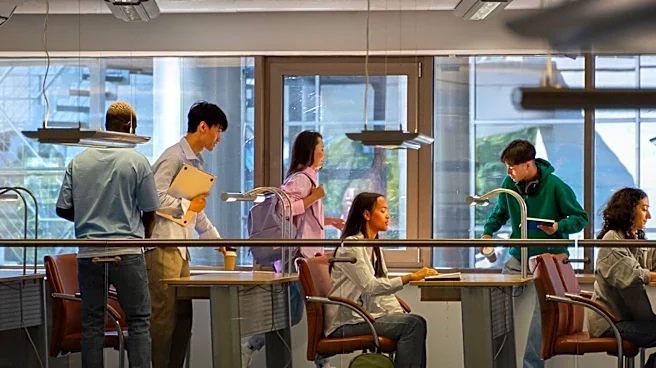
is the New Norm, and Connection is Key. This framework emphasizes the need for flexible solutions that can adjust to evolving educational dynamics, encourage new ideas, offer a variety of space types for different learning preferences, and facilitate student engagement and collaboration. Haworth identifies five types of campus spaces—Individual, Group, Multi-Use, Living, and Specialty—each designed to serve specific functions, from focused individual work to collaborative learning and residential needs. The company stresses that the entire campus, not just traditional classrooms, is a holistic learning environment, and thoughtful space design enhances the educational experience.
Why It's Important?
The evolving landscape of higher education, driven by technological advancements and changing pedagogical approaches, necessitates a re-evaluation of physical learning environments. Haworth's emphasis on flexibility and connection addresses the critical need for spaces that support diverse learning styles and promote student well-being. Traditional, rigid classroom setups often fail to accommodate collaborative projects, interdisciplinary studies, or the demand for quiet, focused work. By creating versatile spaces, institutions can optimize resource utilization and provide environments that genuinely enhance the learning process. This approach is vital for U.S. universities and colleges to remain competitive, attract top talent, and prepare students for a dynamic workforce that values adaptability and teamwork. Investing in such designs can lead to improved student engagement, better academic outcomes, and a stronger sense of community on campus.
What's Next?
Higher education institutions are expected to increasingly prioritize flexible and adaptable designs in their campus development and renovation projects. This will likely involve greater collaboration with design and furniture companies like Haworth to implement innovative solutions. The focus will be on creating multi-functional areas that can be reconfigured for various activities, from large lectures to small group discussions and individual study. There will also be a continued push to integrate technology seamlessly into these spaces to support hybrid learning models and digital collaboration. Universities will need to regularly assess the effectiveness of these new designs to ensure they meet the evolving needs of their student bodies and faculty, potentially leading to ongoing adjustments and refinements in campus planning.
Beyond the Headlines
The shift towards flexible and connected learning spaces reflects a broader societal trend towards dynamic, collaborative work environments. This evolution in educational design is not just about aesthetics or comfort; it's about fundamentally rethinking how learning happens and how physical spaces can best support it. It also highlights the growing recognition that learning extends beyond formal classroom settings, encompassing informal interactions, social spaces, and even residential areas. This holistic view of the campus as a learning ecosystem can foster a more integrated and enriching student experience, blurring the lines between academic and social life. Furthermore, the emphasis on adaptability prepares institutions for future disruptions, ensuring they can quickly pivot to new educational models, whether driven by technological innovation or unforeseen global events.