





What's Happening?
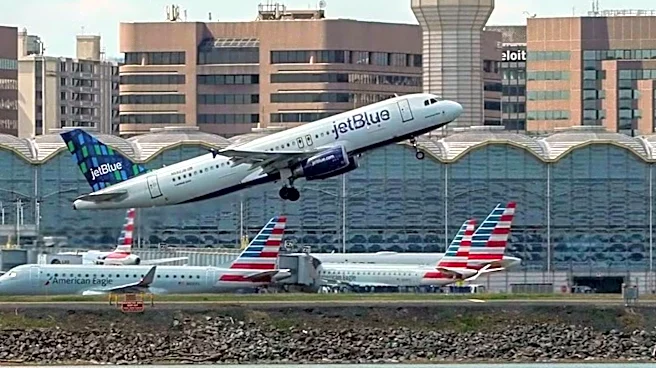
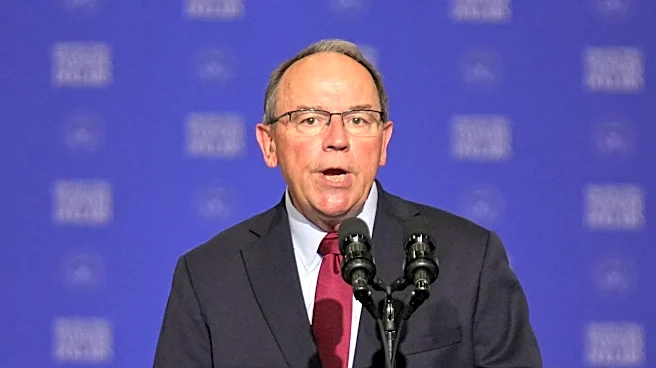
Virginia's U.S. Senators Tim Kaine and Mark Warner, both Democrats, have introduced the DCA Air Safety Act in response to a deadly 2025 crash near Ronald Reagan Washington National Airport (DCA) and ongoing concerns about overcrowding. The crash, which
involved an American Airlines Bombardier jet and an Army Black Hawk helicopter over the Potomac River, killed 67 people. The National Transportation Safety Board (NTSB) investigation revealed that one air traffic controller was managing 29 aircraft within an 18-minute period on the night of the collision. The proposed legislation aims to enhance safety by capping hourly arrivals at no more than 28 aircraft per 60-minute period, down from the current rate of 30 (which was 32 at the time of the crash). It also seeks to reduce flight clustering by requiring airports to set limits for each 30-minute period to spread out flights more evenly. Additionally, the bill proposes removing 30 flight slots over five years, starting in 2028, including at least 26 flights that currently exceed the airport's 1,250-mile distance limit, with all changes completed by the end of 2032. Since 2000, DCA has added 64 daily flights, contributing to the congestion.
Why It's Important?
This legislation is crucial for addressing significant safety concerns at one of the nation's busiest airports, Reagan National. The NTSB's findings, particularly the high volume of aircraft managed by a single air traffic controller during the 2025 crash, underscore the immediate need for operational changes. Overcrowding at DCA, which operates along restricted airspace and beyond its capacity, poses a direct threat to public safety, as evidenced by the fatal crash and subsequent near-miss incidents, including one involving a plane carrying President Trump. By capping hourly arrivals and reducing flight clustering, the bill aims to mitigate the risk of future collisions and improve air traffic control manageability. The proposed reduction in flight slots, especially those exceeding the airport's distance limit, seeks to alleviate overall congestion and enhance safety margins. This initiative reflects a legislative response to a clear and present danger, aiming to prevent further tragedies and restore confidence in air travel safety at a critical transportation hub.
What's Next?
The DCA Air Safety Act will now proceed through the legislative process in Congress, where it will require debate, potential amendments, and votes in both the Senate and the House. If passed, the bill mandates a public process from the Federal Aviation Administration (FAA), including publishing a proposed list of slots to be eliminated, a 60-day public comment period, and the publication of a final list within 120 days after the comment period closes. The FAA would then be required to implement the new caps on hourly arrivals and the staggered flight schedules. The removal of 30 flight slots would be phased in over five years, beginning in 2028 and concluding by the end of 2032. Stakeholders, including airlines, air traffic controllers, and passenger advocacy groups, will likely engage in the public comment period and lobbying efforts as the bill progresses. The success of the bill will depend on bipartisan support and the ability to overcome potential opposition from airlines that may be affected by slot reductions.
Beyond the Headlines
The introduction of the DCA Air Safety Act highlights a broader tension between economic demand for air travel and the imperative of safety, particularly at airports operating near or beyond capacity. This situation at Reagan National Airport could serve as a precedent for other congested airports across the U.S., prompting a reevaluation of air traffic management and slot allocation policies nationwide. Ethically, the bill underscores the government's responsibility to prioritize public safety over commercial interests when the two conflict. Legally, its passage would empower the FAA to enforce stricter operational limits, potentially leading to challenges from airlines or other entities affected by the changes. Culturally, the memory of the 2025 crash and subsequent near-misses will likely fuel public demand for robust safety measures, influencing future policy decisions regarding airport expansion and operational protocols. The long-term implications could include a shift towards more conservative air traffic management strategies at busy urban airports, potentially impacting travel convenience but enhancing overall safety.